
LG Energy Solution’s Consolidated Subsidiary Ultium Cells Faces Overtime Pay Class Action by U.S. Plant Workers Alleging Unpaid Time Spent Putting On and Removing Protective Gear
English translation of the original Korean report. Images and source documents may contain Korean text.
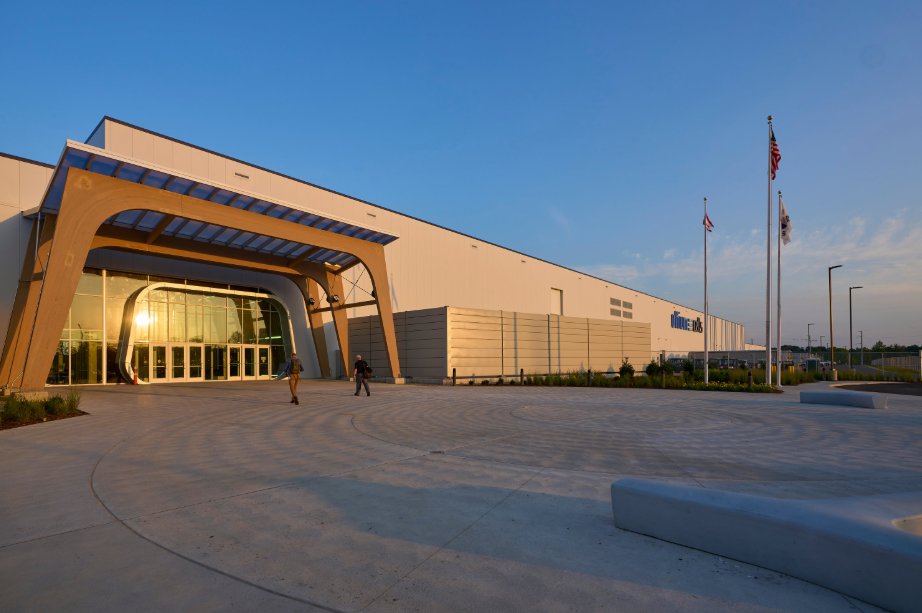
Ultium Cells, a U.S. battery joint venture that LG Energy Solution consolidates as a subsidiary after recognizing its ‘control’ over the company, has been sued by factory workers in a class action seeking unpaid overtime compensation.
The workers allege that the company failed to count time spent putting on and removing cleanroom suits and respiratory protective equipment, as well as time spent on shift handovers before and after their scheduled shifts, as working time.
According to a complaint filed with the U.S. District Court for the Northern District of Ohio, reviewed on the 14th, a worker formerly employed in production at the Warren, Ohio, plant filed a lawsuit against Ultium Cells and General Motors (GM) in that court on the 12th (local time). The worker brought claims on behalf of similarly situated employees under the federal Fair Labor Standards Act (FLSA) and Ohio wage laws.
The complaint describes the following working arrangements. Employees worked 12-hour shifts and frequently had weeks totaling 48 working hours. The plaintiff alleges that, before their shifts, workers were required to put on cleanroom suits, protective footwear, cut-resistant gloves and powered air-purifying respirators (PAPRs), among other equipment, before walking to their work areas to relieve the preceding shift.
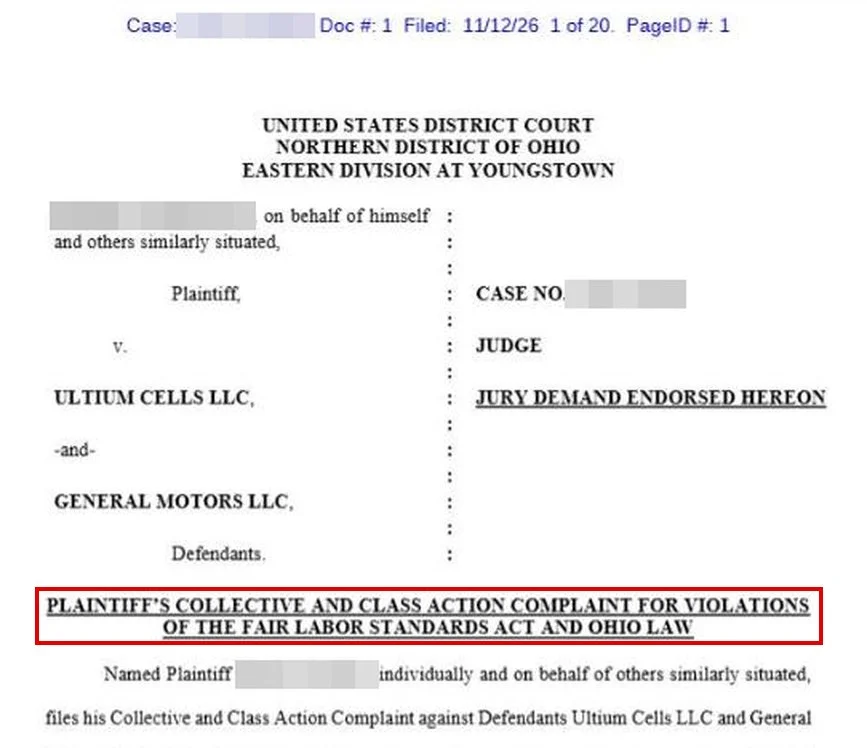
The plaintiff alleges that the company prohibited workers from clocking in more than seven minutes before the start of their shifts and rounded early clock-in records forward to the scheduled start time. The complaint also alleges that workers were not paid for the time spent returning to the changing room and removing their protective equipment after handing over their duties to the next shift.
U.S. courts apply the ‘continuous workday rule,’ under which the period from the beginning of an employee’s first principal activity to the completion of the last principal activity of the day is treated as working time. The plaintiff argues that putting on protective equipment constitutes the first principal activity and that all subsequent time must therefore be compensated. The proposed group covered by the claims consists of all hourly paid production workers who worked more than 40 hours per week during the three years preceding the filing of the lawsuit, or two years under Ohio law. The plaintiff did not specify the amount of damages sought, stating that it would be determined during the proceedings.
■ Lawsuit Targets GM, but LG Energy Solution Holds Control
The plaintiff named GM as a defendant alongside Ultium Cells, arguing that GM is a co-owner of Ultium Cells and directly paid wages to some workers. The plaintiff also submitted pay statements as evidence.
LG Energy Solution owns the remaining 50% stake in Ultium Cells. In its third-quarter report released the previous day, LG Energy Solution included Ultium Cells as a consolidated subsidiary. The company explained that, under a shareholders’ agreement, it can exercise a majority of voting rights in decision-making and influence Ultium Cells’ profits through production and cost management. LG Energy Solution has also provided payment guarantees covering $396 million of Ultium Cells’ $792 million in borrowings.
LG Energy Solution is headed by President and CEO Kim Dong Myung. Its largest shareholder is LG Chem, which holds a 79.38% stake, while LG Chem’s largest shareholder is LG Corp., with a 31.52% stake. LG Corp.’s largest shareholder is its Chairman and CEO Kwang Mo Koo, who holds a 16.60% stake.
The Warren plant has previously been cited by the U.S. Department of Labor’s Occupational Safety and Health Administration (OSHA) over issues involving protective equipment. In October 2023, OSHA identified 19 safety and health violations at the plant, including 17 serious violations, and proposed approximately $270,000 in penalties. The violations included failures to comply with personal protective equipment standards, including requirements involving respiratory protection, and the company contested the citations.
At present, two workers are participating in the lawsuit: the named plaintiff and one worker who has filed a consent-to-join form. If the court authorizes notice of the collective action, current and former production workers at the Warren plant and other covered facilities may join the lawsuit.