
Hyundai Motor decides to invest another 285.2 billion won in 42dot, which posted a 349.6 billion won operating loss, on the day it cuts its sales target
English translation of the original Korean report. Images and source documents may contain Korean text.
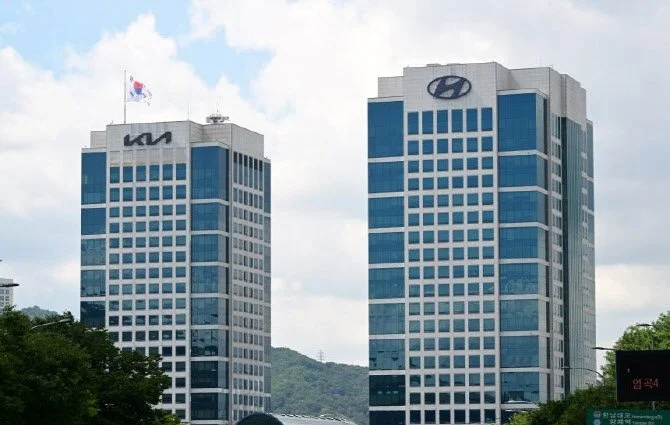
Cumulative investment in software bet under Chairman Euisun Chung reaches 1.2205 trillion won; average domestic passenger car selling prices rise as Tesla tops imported car brand rankings
Hyundai Motor Company (Chairman Euisun Chung) decided to invest an additional 285.2 billion won in its software subsidiary 42dot, which recorded revenue of 19.4 billion won and an operating loss of 349.6 billion won last year, on the same day it lowered both its sales and profit margin targets for this year.
According to the Financial Supervisory Service’s electronic disclosure system (DART) on the 27th, Hyundai Motor lowered its sales target for this year from 4,158,300 vehicles to 4 million vehicles on the 29th of last month.
The company lowered its domestic sales target from 700,000 to 664,000 vehicles, its consolidated operating profit margin target from 6.3–7.3% to 5.5–6.5%, and its investment plan from 17.8 trillion won to 16 trillion won. Cumulative operating profit through the third quarter fell 17.7% year on year to 8.0428 trillion won.
On the same day, the Sustainability Management Committee of Hyundai Motor’s board of directors approved a 285.2 billion won capital contribution to 42dot through a paid-in capital increase. The contribution is scheduled to be paid in two installments, this month and in April next year.
Including the latest capital contribution, Hyundai Motor’s cumulative investment in 42dot will reach 1.2205 trillion won. Hyundai Motor described 42dot as a company that supplies software for the group’s software-defined vehicles (SDVs).
42dot is an autonomous driving and vehicle software company that Hyundai Motor acquired in 2022. Its operating expenses reached 369 billion won last year, while its operating loss more than doubled from 173.7 billion won the previous year.
President Changhyeon Song, who founded and led the company, stepped down after meeting with Chairman Euisun Chung in December last year. President Minwoo Park, formerly of NVIDIA, succeeded him.
■ Average domestic passenger car selling prices rise as sales volumes decline
According to Hyundai Motor’s quarterly report, the average selling price of passenger cars in South Korea rose each year, from 53.98 million won in 2024 to 56.17 million won last year and 57.41 million won in the third quarter of this year.
By contrast, the average selling price of passenger cars overseas fell from 75.92 million won last year to 72.29 million won. The overseas figure is a simple average of selling prices in the United States, Germany and Australia after applying exchange rates.
The new Avante, launched in August, drew criticism after the instrument cluster in front of the driver was removed from the base model’s standard equipment and offered as a 350,000 won option. Hyundai Motor subsequently decided to provide and install the instrument cluster free of charge through the end of the year.
Hyundai Motor President and CEO José Muñoz cited rising raw material prices and enhanced features in base vehicles in response to the pricing controversy.
Meanwhile, Tesla is expanding its presence in the South Korean market. According to figures from the Korea Automobile Importers & Distributors Association (KAIDA), Tesla registered 9,165 vehicles in October, ranking first among imported car brands. Model Y registrations reached 78,631 units from January through October this year.
The capacity utilization rate at the company’s Georgia plant in the United States (HMGMA) also fell below 50%. Cumulative production through the third quarter of this year totaled 35,005 vehicles, representing just 41.4% of its production capacity of 84,500 vehicles. The capacity utilization rate at domestic plants was 93.6% over the same period.
Hyundai Motor cited production disruptions caused by the Chuseok holiday, labor union strikes and other factors as reasons for the decline in third-quarter sales. However, domestic sales volumes continued to decline in October, the first month of the fourth quarter, falling 8.9% from the same month a year earlier.