
Japan’s Maxell Says ‘Samsung Alone Refuses Patent Licensing Deal,’ Seeks U.S. Import Ban on Galaxy Devices…Samsung Hits Back by Seeking Testimony From Maxell Employees in Tokyo
English translation of the original Korean report. Images and source documents may contain Korean text.
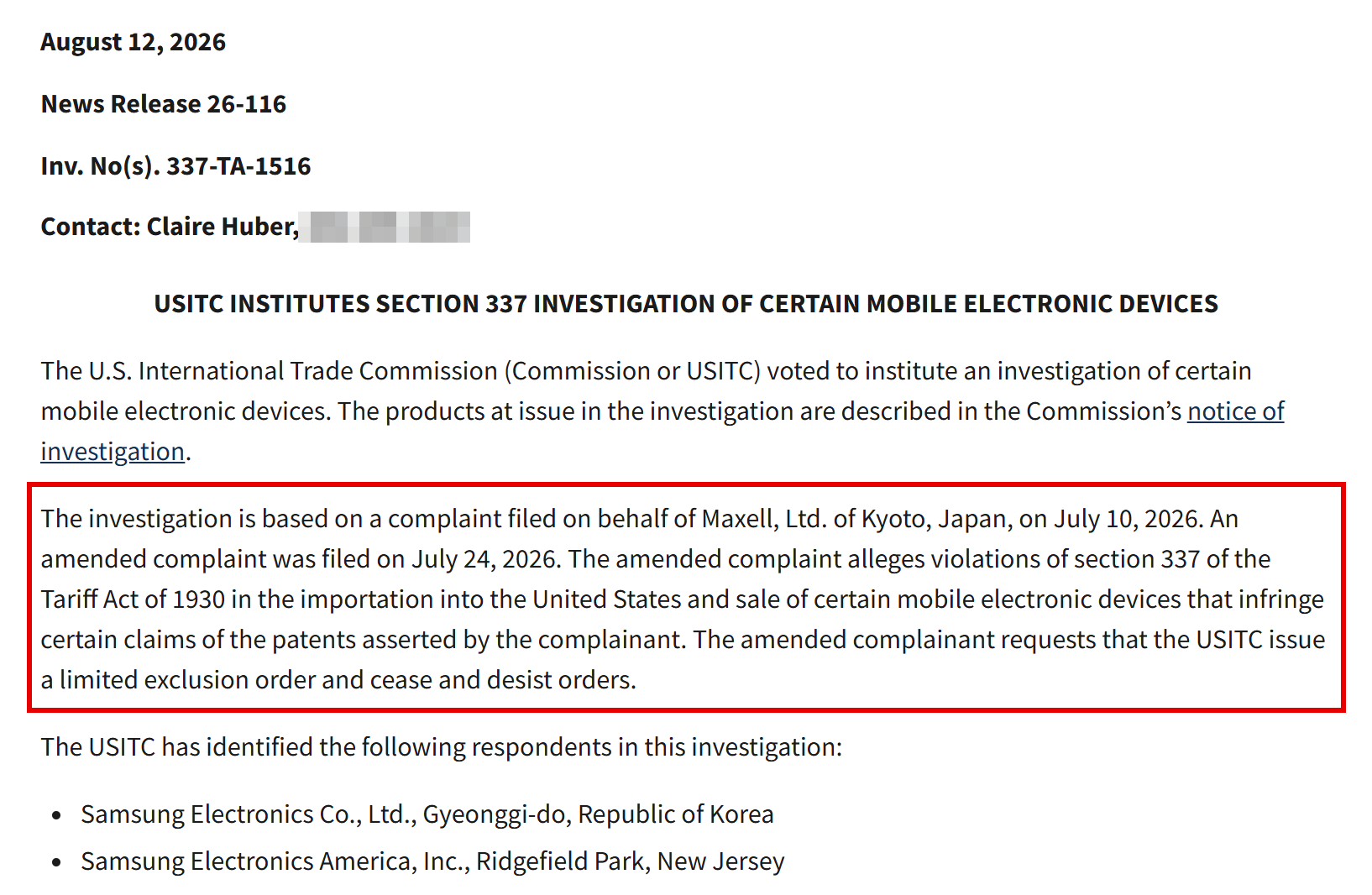
Maxell: ‘Other Companies Have Signed Licensing Agreements, but Samsung Alone Refuses’…Samsung: ‘Patents Combine Existing Technologies, Unfavorable Information Withheld During Examination’
Japanese battery and electronic components manufacturer Maxell has requested a U.S. import ban on Galaxy smartphones and tablets, claiming that Samsung Electronics, unlike other smartphone manufacturers, has refused to enter into a patent licensing agreement. Samsung has countered by alleging that Maxell concealed important information during the process of obtaining its patents.
According to the U.S. International Trade Commission (ITC) on the 19th, Maxell filed a patent infringement complaint against Samsung Electronics and its U.S. subsidiary, Samsung Electronics America, in July. Maxell alleges that products including the Galaxy S25, Z Fold7, Z Flip7, S26 Plus and Galaxy Tab S11 infringe six of its patents and has requested restrictions on their importation and sale in the United States.
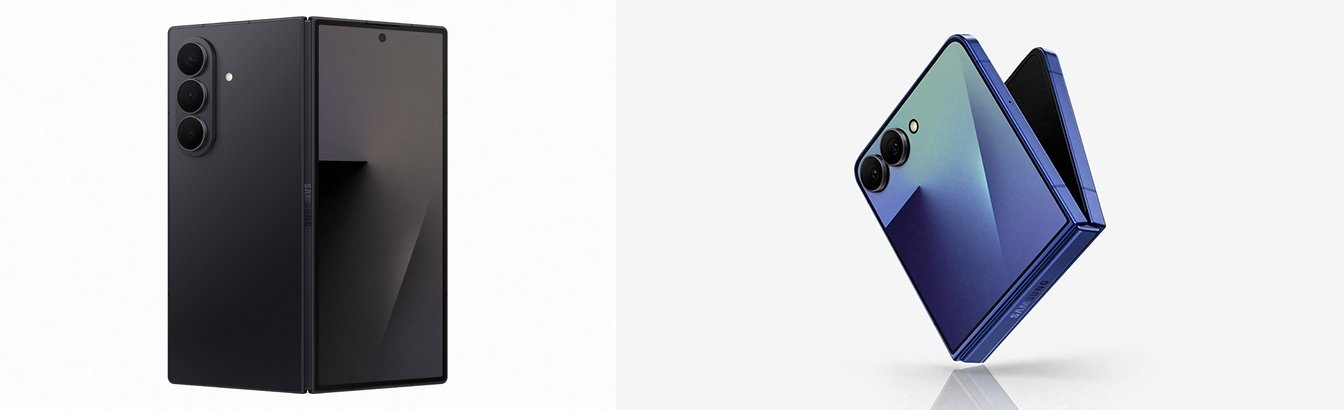
Maxell claims to hold approximately 6,000 smartphone-related patents and says it has proposed a licensing agreement covering its entire patent portfolio to Samsung Electronics since 2021. According to Maxell, Samsung has avoided good-faith negotiations for years, leaving it no choice but to litigate individual patents. Maxell also alleges that Samsung is using its considerable financial resources in the hope that Maxell will eventually become exhausted and withdraw.
Maxell argues that Samsung Electronics’ refusal to sign a licensing agreement, while other Android smartphone manufacturers, including Motorola, have already entered into such agreements, undermines fair competition. Maxell also disputed Samsung’s concerns about consumer harm from an import ban, arguing that Samsung holds less than 22% of the U.S. smartphone market and that sufficient alternatives are available from Apple, Google, Motorola and other manufacturers.
The ITC formally instituted its investigation on August 12 and is scheduled to complete it by December 14, 2027. Samsung Electronics denies the patent infringement allegations.
■ Maxell: ‘Technology Inherited From Hitachi’ vs. Samsung: ‘Combination of Existing Technologies and Concealment of Information’
At issue in Samsung Electronics’ challenge is U.S. Patent No. 12,418,692, one of the patents asserted by Maxell in the current case. The technology stems from an invention filed by Japan’s Hitachi in 2007 and involves equipping a device with multiple wireless communication components so that one can transmit video while another connects to the internet. Maxell filed the patent application in October 2024 and obtained registration in September 2025.
Samsung Electronics petitioned for inter partes review of two earlier Maxell patents based on the same underlying technology, arguing that the technology claimed by Maxell was merely a combination of previously disclosed technologies. Samsung contends that anyone examining the user manual for the Nokia N93 mobile phone, released in 2006, together with patent documents from other companies, could readily have conceived of the invention.
In April this year, the U.S. Patent Trial and Appeal Board accepted Samsung Electronics’ arguments and determined that all the challenged patent claims were unpatentable.
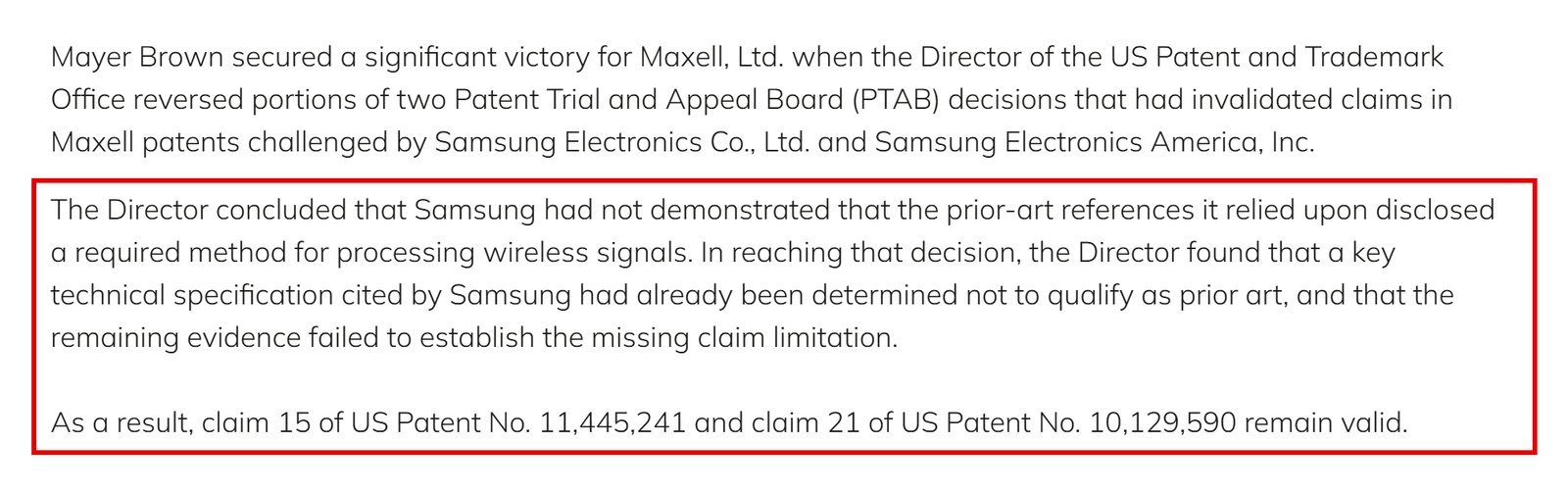
However, according to Mayer Brown, Maxell’s legal counsel, the Director of the U.S. Patent and Trademark Office reversed the findings for one claim in each of the two patents in September, concluding that the materials submitted by Samsung Electronics were insufficient to establish that certain aspects of the technology had already been known.
Separately, Samsung Electronics alleges that there were also problems with Maxell’s process of obtaining a new patent. Although inter partes review proceedings involving two earlier patents were already underway, Maxell allegedly informed the patent examiner only that review petitions had been filed, without disclosing the December 2024 decisions to institute formal proceedings or the materials subsequently submitted. Samsung maintains that if Maxell deliberately concealed unfavorable information, it should be barred from enforcing the new patent.
To investigate these allegations, Samsung Electronics has arranged to obtain testimony from three Maxell employees in Japan. U.S. District Judge Rudolph Contreras of the U.S. District Court for the District of Columbia authorized the procedure on the 12th. The testimony is scheduled to be taken from December 7 to 14 at the U.S. Embassy in Tokyo under consular supervision. Maxell also agreed not to oppose the procedure and to cooperate in having the employees involved in the patent application process voluntarily provide testimony.
However, the court merely authorized Samsung Electronics to obtain the testimony; it did not uphold Samsung’s allegations of information concealment. For inequitable conduct during the patent prosecution process to be established in the United States, it is necessary to prove not only that material information was omitted but also that there was an intent to deceive the patent examiner.
The two companies are also contesting a separate patent infringement case. In the case filed by Maxell in December 2024, an ITC administrative law judge found in July this year that Samsung Electronics had infringed one of Maxell’s patents. The ITC is reviewing portions of that determination and is scheduled to issue its final ruling on the 24th.