
Hyundai Recalls Avante and Venue Vehicles Over Risk of Wheels Detaching: Entire Hub Assemblies Replaced in U.S., but 255 Korean Vehicles Get Wheel Nuts Retightened
English translation of the original Korean report. Images and source documents may contain Korean text.
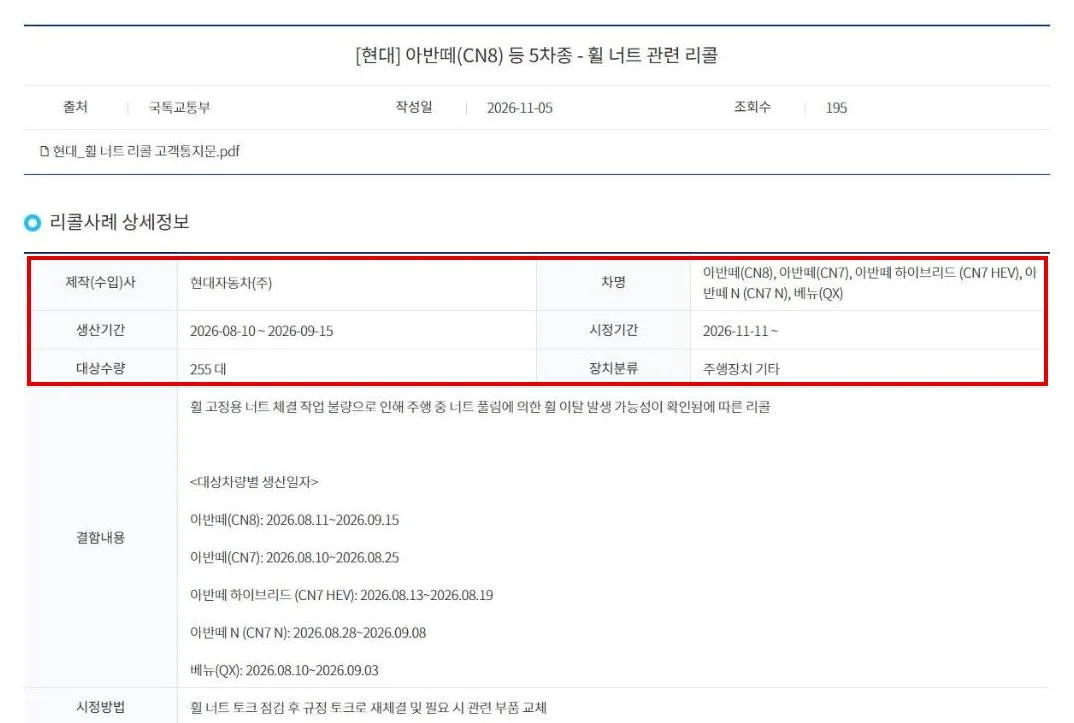
Hyundai Motor Company is recalling 255 Avante and Venue vehicles because defective wheel nuts could allow a wheel to detach while driving. In the United States, where the same defect was reported earlier, the entire hub bearing assembly supporting the wheel is replaced. In South Korea, however, the standard remedy is to retighten the nuts.
According to the Ministry of Land, Infrastructure and Transport’s Motor Vehicle Recall Center on the 11th, Hyundai began corrective measures that day for 255 vehicles across five variants: the Avante (CN8), Avante (CN7), Avante Hybrid, Avante N and Venue. The affected vehicles were manufactured between August 10 and September 15 this year. Hyundai said improper tightening of the nuts securing the wheels could cause them to loosen while driving, potentially allowing a wheel to detach.
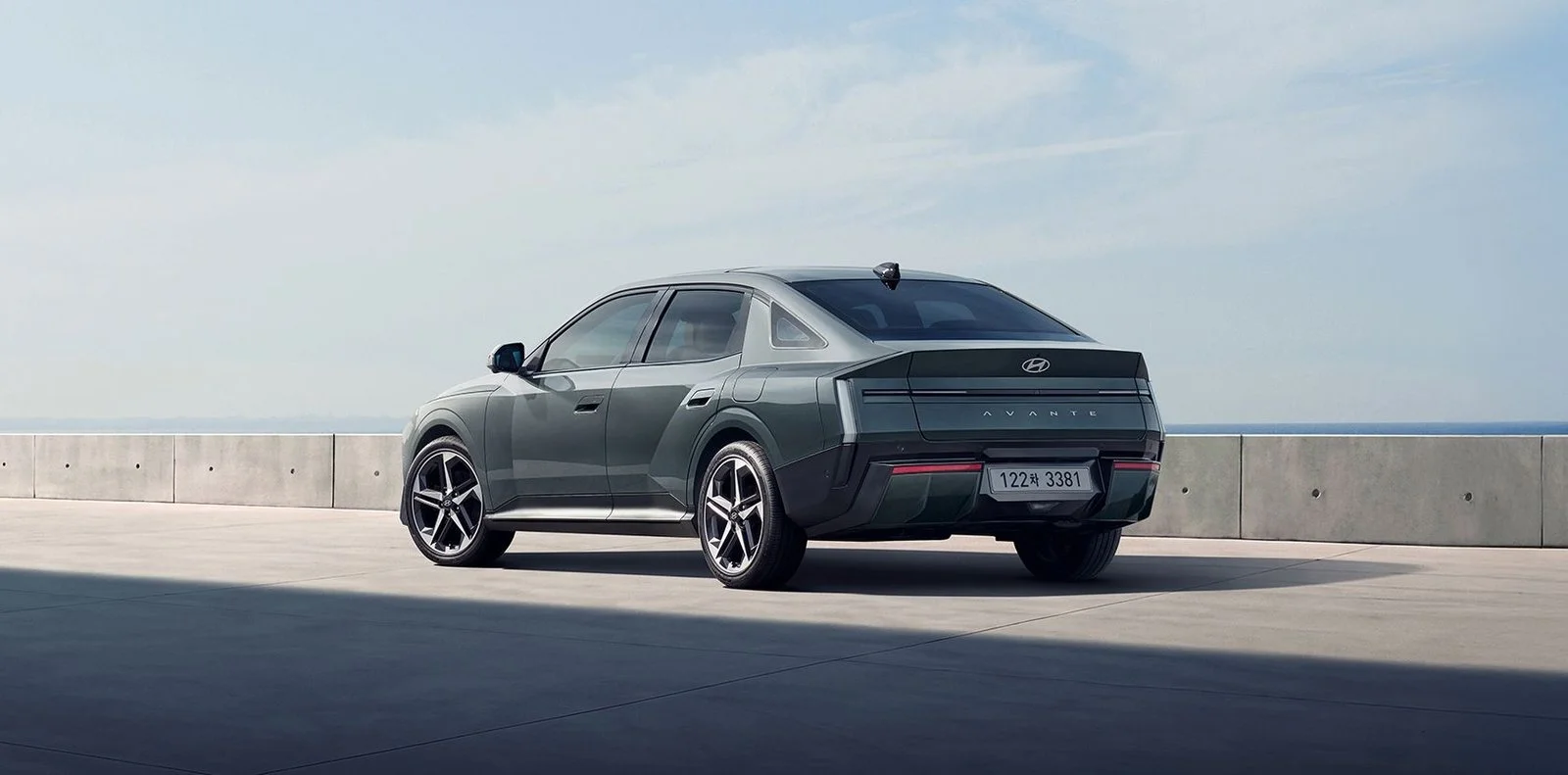
In South Korea, the corrective procedure involves checking the tightening torque of the wheel nuts, retightening them to the specified standard and replacing related components if necessary. According to Hyundai’s customer notification, retightening takes approximately 0.3 hours per vehicle, while replacing components can take up to approximately 3.6 hours.
The recall was first reported in the United States. On the 21st of last month, Hyundai Motor’s U.S. subsidiary reported a wheel nut recall to the National Highway Traffic Safety Administration (NHTSA) covering 17 vehicles from the 2026 model year, including the Venue, Elantra (sold as the Avante in South Korea), Elantra Hybrid and Elantra N. Although the defect is the same as in South Korea, U.S. dealers replace the hub bearing assembly before reinstalling the wheel. The number of affected vehicles in South Korea is 15 times that in the United States, yet rather than replacing the assemblies across the board, Hyundai determines whether components need replacement based on inspection results in South Korea.
■ Three Recalls Involving Wheel and Steering Components in Six Weeks
This is not Hyundai’s only recall involving improperly secured components. On the previous day, the 10th, Hyundai began recalling four Avante (CN7) vehicles because of improper fastening between the front suspension strut, a shock-absorbing component, and the steering knuckle, which connects the wheel to the steering system. The defect could cause the vehicle to pull to one side and lose steering control if the connection separates. In the United States, a recall involving improperly fastened front struts was also reported on the 20th of last month, covering 24 vehicles from the 2026 Tucson Hybrid and Elantra model lines.
Earlier, on October 1, a recall involving front steering knuckles began for 90 Kona and Kona Hybrid vehicles. Insufficient heat-treatment time had reduced the strength of the knuckles, creating a defect that could result in a loss of steering if a knuckle deformed or fractured. This marked three recalls involving wheel and steering-related components within six weeks.
Hyundai Motor Company’s largest shareholder is Hyundai Mobis, with a 22.36% stake. As of the end of June, the combined ownership of Hyundai Mobis and related parties, including Hyundai Motor Group Honorary Chairman Mong-Koo Chung (5.57%) and Hyundai Motor Group Executive Chair Euisun Chung (2.73%), stood at 30.67%. Kia is Hyundai Mobis’ largest shareholder, with an 18.10% stake, while Executive Chair Chung also holds 0.33% of Hyundai Mobis. Hyundai Motor Company’s CEOs are Executive Chair Euisun Chung and President José Muñoz.
In its customer notification, Hyundai advised: “Due to the high volume of vehicles brought in during the initial phase of the recall, corrective measures may be delayed, so please make an appointment before bringing in your vehicle.” Owners who paid for repairs themselves before the recall can receive reimbursement for repairs performed on or after November 11, 2025. Recall notification letters are scheduled to be sent to U.S. vehicle owners on the 19th of next month.