
Daewoo E&C Has 348.2 Billion Won Tied Up in Two Nigerian Oil Refineries with Missed Deadlines, Provisions are 0 Won
English translation of the original Korean report. Images and source documents may contain Korean text.
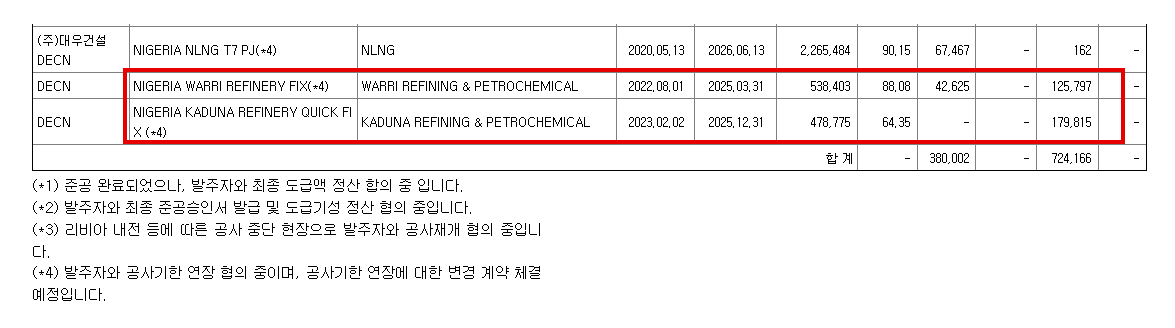
The construction costs that Daewoo E&C has not yet received from two Nigerian state-owned oil refineries amount to 348.2 billion won.
Although both sites have exceeded their contractual construction deadlines, not a single penny has been set aside as bad debt provisions, which are costs reserved in advance in case money is lost.
According to the Financial Supervisory Service’s electronic disclosure system on the 10th, as of the end of June this year, Daewoo E&C has 125.8 billion won in accounts receivable for construction and 42.6 billion won in unbilled construction for the Warri Refinery emergency repair project.
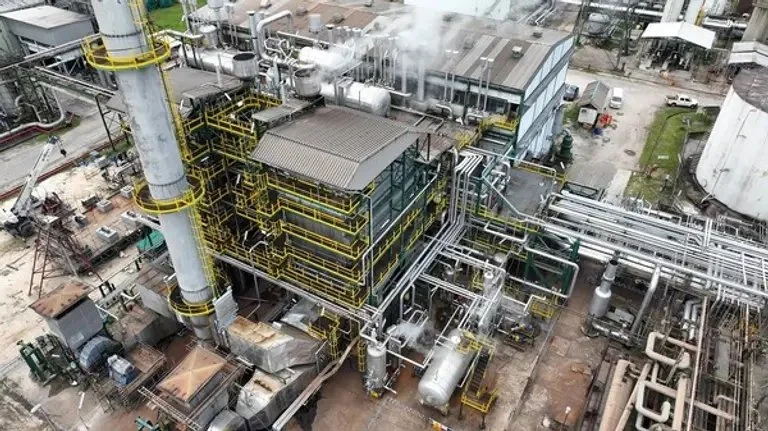
Unbilled construction refers to money for work that has been completed but not yet invoiced to the client. The accounts receivable for construction for the Kaduna Refinery emergency repair project is 179.8 billion won. The clients for both projects are refinery companies affiliated with the Nigerian National Petroleum Corporation (NNPC).
The money to be received has increased, not decreased. Accounts receivable for the Kaduna site increased by 12.8 billion won in three months, from 167 billion won at the end of March this year. Unbilled construction for the Warri site grew from 29.5 billion won at the end of last year to 42.6 billion won. The combined amount tied up in the two sites represents 8.9% of Daewoo E&C’s consolidated equity of 3.9246 trillion won.
The construction was not completed within the deadline. For the Warri project, with a contract amount of 538.4 billion won, the construction deadline was once extended from the end of December 2024 to the end of March 2025, but that deadline has also passed. As of the end of June, the progress rate is 88%.
For the Kaduna project, valued at 478.8 billion won, the deadline was the end of December last year, but the progress rate remains at 64%. Daewoo E&C stated in its semi-annual report regarding the two sites that it is “currently negotiating with the client for an extension of the construction period, and a revised contract for the extension of the construction period is expected to be signed.”
Clients Seek New Partners While Books Show 0 Won in Loss Provisions
The clients are re-selecting partners to entrust with the refinery projects. According to local media, three Nigerian state-owned oil refineries have mostly remained shut down for over 10 years, despite billions of dollars spent on repairs.
Bayo Ojulari, NNPC Chief Executive Officer, stated in November last year that “we want partners with proven ability to operate refineries,” and announced that they would seek new partners.
On April 30 this year, NNPC signed a memorandum of understanding with two Chinese companies regarding the Warri and Port Harcourt refineries. CEO Ojulari explained that this memorandum of understanding is not a binding contract.
This risk is not reflected in Daewoo E&C’s books. In the contract-specific information table of the semi-annual report, both bad debt provisions and impairment losses on unbilled construction for the Warri and Kaduna sites are 0 won. This implies that no money is considered uncollectible.
Daewoo E&C’s Nigerian subsidiary, which is undertaking the two projects, is a consolidated subsidiary with a 49% stake, so any losses incurred by this subsidiary are directly reflected in Daewoo E&C’s consolidated performance.
The liquefied natural gas (LNG) Train 7 project, Daewoo E&C’s largest site in Nigeria, also exceeded its contractual deadline of June 13 this year and entered into extension negotiations. Unbilled construction for this project, valued at 2.2655 trillion won, increased from 0 won at the end of last year to 67.5 billion won at the end of June. The progress rate, which was 91.0% at the end of March, actually regressed to 90.15% at the end of June.
Daewoo E&C’s largest shareholder is Jungheung Construction, which holds a 41.07% stake. Jungheung Construction is 100% owned by Jung Won-ju, Chairman of Daewoo E&C. Chairman Jung is an unregistered full-time chairman who is not on the board of directors.
On the 4th of this month, Daewoo E&C received a notice of award for the Indorama Fertilizer Plant Unit 4 project in Nigeria. The project size is approximately 350 billion won, similar to the amount tied up in the two overdue refinery projects. Site-specific figures as of the end of September will be included in the third-quarter report, which is due by the 14th.