
Etoos, Under Hong Kong Private Equity Ownership, Shut Down Student Q&A Board Instead of Disclosing Refund Criteria After Lectures Stopped Three Weeks Before CSAT
English translation of the original Korean report. Images and source documents may contain Korean text.
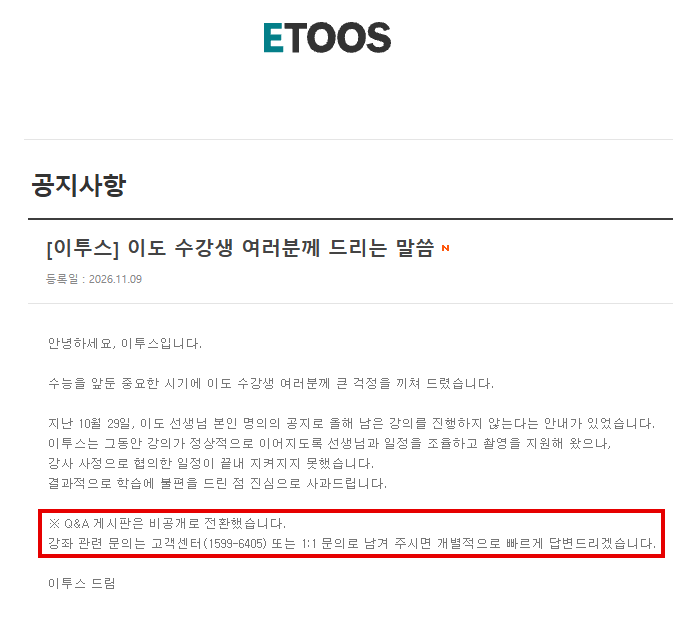
When a star instructor stopped teaching just three weeks before the College Scholastic Ability Test (CSAT), Etoos moved first to shut down its student Q&A board. The company promised refunds but has yet to disclose how much it would return or the criteria for calculating the amounts. As of the end of last year, the company had received 13.4 billion won in advance payments from students enrolled across all its courses.
According to the Etoos website and the Financial Supervisory Service’s electronic disclosure system on the 11th, Etoos said in a statement posted on the 9th that Yi Do, an instructor of Korean Geography and World Geography, had informed the company on October 29 that deteriorating health made it difficult to continue teaching normally. The company explained that this made it difficult to produce final exam preparation courses and the remaining new courses. Etoos said it would make its existing question-and-answer (Q&A) board private and handle course-related inquiries through its customer service center and one-on-one inquiries.
Regarding refunds, the company said only that it would handle tuition fees for individual courses and textbook costs for unfinished courses ‘swiftly and rigorously.’ The statement did not specify how much would be refunded, what criteria would determine the amounts, or whether replacement lectures would be provided. The public channel where students could view one another’s complaints and questions was closed, leaving only channels through which the company and individual students could communicate one-on-one.
Students’ backlash intensified over the instructor’s activities. On the 5th, just one week after announcing the suspension of lectures, Yi Do attended a production press conference for the variety show ‘The Devil’s Plan: Dead Again’ and opened a personal YouTube channel on the 7th. In a handwritten apology posted on social media on the 10th, Yi Do said, ‘It was my fault, for which there is no excuse.’ Students claim that lectures, textbooks and responses to questions had already been significantly delayed since August. The instructor also failed to complete CSAT preparation lectures last year because of health problems. The company’s statement mentioned only the October 29 notification and did not disclose when it had become aware of the earlier delays.
■ Concealed Reviews, Paid Comment Posters and Inflated Credentials
This was not the first time the company’s handling of students’ voices had come under scrutiny. In 2011, the Korea Fair Trade Commission imposed administrative fines on five online education providers, including Etoos, for selectively withholding student reviews that were unfavorable to the companies. Etoos was fined 6 million won. In December 2023, the company was also sanctioned by the commission for advertising that a textbook author had served as a CSAT question-setting committee member seven times, rather than the actual three times.
In October 2021, the Supreme Court of Korea upheld the conviction of Kim Hyeong-jung, then CEO of Etoos Education. Kim received a sentence of one year and six months in prison, suspended for two years, on charges related to having a viral marketing agency post comments between 2012 and 2016 that impersonated students, promoted Etoos instructors and disparaged instructors at rival companies. The court regarded the disparaging comments posted under the guise of being students as a form of deception.

Kim stepped down as CEO in January of the following year, and Jeong Seon-wook, who had overseen the company’s private academy business as head of the O2O Platform Business Division, became CEO in December of the same year. In April 2023, Jeong announced a new vision in a company-wide notice, saying Etoos would move away from an instructor lineup dependent on star teachers and establish a system for managing instructors.
The amount collected from students in advance is substantial. According to last year’s audit report for ETOOS Edu, which operates the lecture business, the 13.4 billion won represented advance payments for tuition and related charges across all courses, recorded as advances from customers.
Separately, the company had recorded 5.9 billion won for refunds it expected to make. The company has not disclosed the number of students enrolled in Yi Do’s courses or the total tuition fees involved. Revenue for the same year stood at 156.2 billion won, down 5.2% from 164.8 billion won a year earlier, while the company posted a net loss of 4.6 billion won, marking its second consecutive year in the red. As of the end of last year, the company also had 2.8 billion won in borrowings from former CEO Kim Hyeong-jung at an annual interest rate of 4.6%. The amount had been 5.8 billion won a year earlier.
■ Hong Kong-Based Anchor PE, Which Controls Etoos, Has Yet to Exit After 11 Years and Refinances 100 Billion Won in Debt
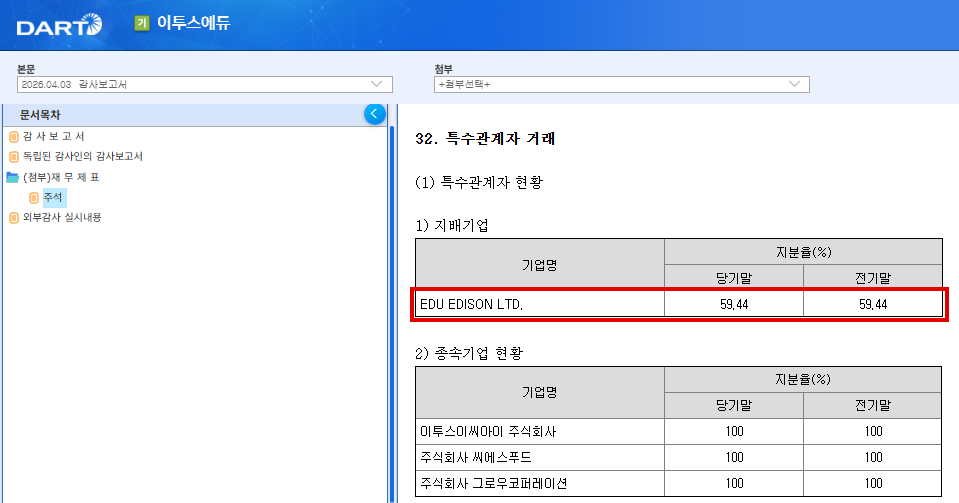
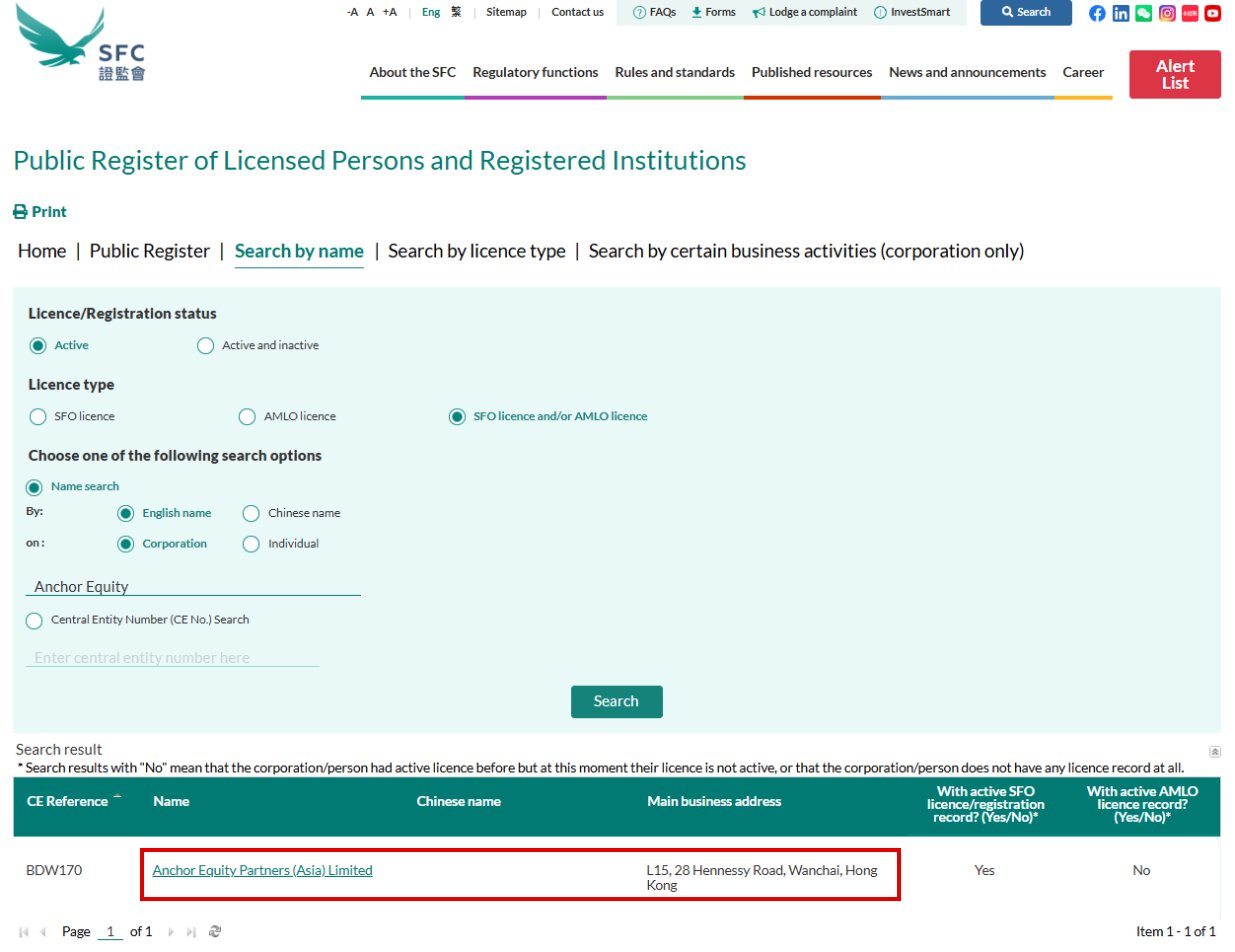
Although ETOOS Edu is headed by CEO Jeong Seon-wook, its largest shareholder is EDU EDISON LTD., which holds a 59.44% stake. According to Legal Entity Identifier (LEI) records, the ultimate parent of this Malta-registered company is ANCHOR EQUITY PARTNERS FUND I, L.P., a fund managed by Hong Kong-based private equity firm Anchor Equity Partners (Anchor PE). According to Etoos Education’s audit reports, EDU EDISON’s stake rose from 27.7% at the end of 2018 to 57.2% at the end of 2019.
According to reports by The Korea Economic Daily and Chosun Biz, Anchor PE invested 35 billion won through bonds with warrants (BW) in 2015 and acquired a 29.48% stake from the existing controlling shareholder for 65 billion won in 2019, securing management control.
The acquisition financing, amounting to more than 90 billion won but less than 100 billion won, had become so unstable ahead of its maturity in April last year that the lending syndicate discussed declaring an event of default (EOD), which would make the loans immediately repayable. Anchor PE borrowed another 100 billion won in May this year to repay the existing debt, but the new financing had a maturity of just one year and six months, with annual interest rates of approximately 7.3% on senior debt and 10.8% on mezzanine debt. Efforts to sell the business, pursued since 2022, have also failed to produce a deal, prompting Etoos Education’s board to decide last year to sell its elementary education subsidiary, Danbi Education, separately.
The CSAT is scheduled for the 19th. Etoos has not disclosed follow-up measures, including whether its contract with the instructor has been terminated.