
Kolmar Korea faces unpaid labor allegations as operating profit rises 41%; first union notified of office withdrawal
English translation of the original Korean report. Images and source documents may contain Korean text.
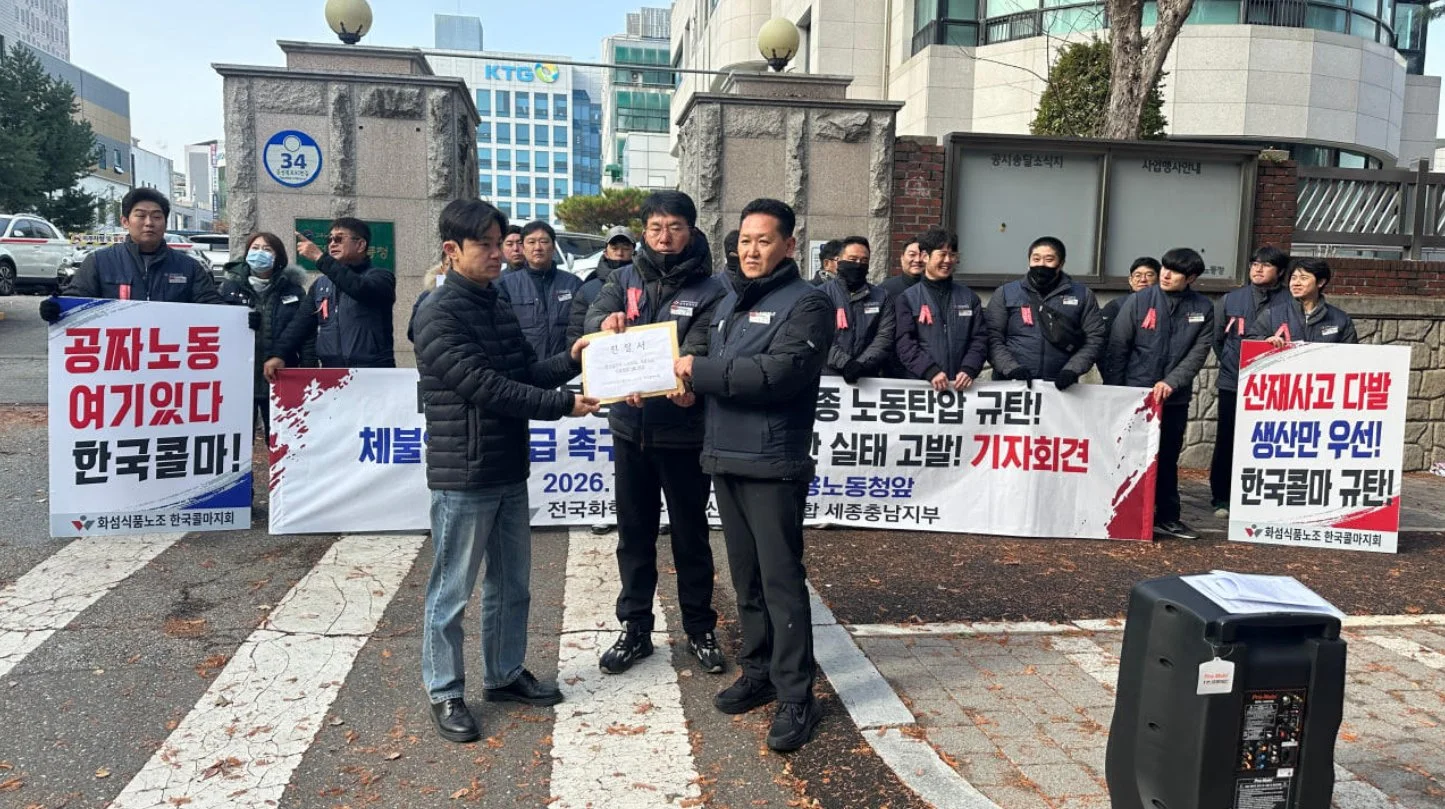
First union in company’s 36-year history marks 30th day of tent sit-in: ‘They are undermining the very foundations of our union as we enter negotiations’
Union alleges unpaid wages for early arrivals and disadvantages for filing occupational injury claims; executive vice president appointed to lead labor-management cooperation office after union’s formation
Kolmar Korea, whose operating profit rose 41% year on year amid the K-beauty boom, is facing allegations of unpaid labor.
The company’s first labor union in its 36-year history has been staging a tent sit-in for a month, alleging that the company is seeking to withdraw its union office and dedicated time for union duties.
According to the Kolmar Korea Chapter of the Korean Chemical, Textile and Food Workers’ Union (KCTFU) on the 24th, the chapter held a press conference that day outside the Daejeon Regional Employment and Labor Office in Seo-gu, Daejeon, demanding an end to union suppression and the payment of overdue wages. The chapter said it would file a complaint over unpaid wages with the labor office.
The union alleged that the company had required workers to arrive early to meet growing orders but had not paid them for the time they spent preparing for production and performing work before their scheduled hours. The union described this as ‘clearly unpaid labor.’
The union also raised concerns about occupational injuries. It alleged that many workers complained of musculoskeletal disorders but that workplace practices discouraged them from even filing occupational injury claims for fear of disadvantages in performance evaluations.
■ Company promised communication but demanded an off-site introductory meeting when union sought negotiations
Kolmar Korea workers formed a labor union on September 1, 36 years after the company was founded. According to the union, beginning on September 3, two days after the union was established, the company provided a union office and allowed the chapter chairperson to focus exclusively on union duties instead of performing regular on-site work.
The union alleges, however, that the company’s attitude changed when it initiated collective bargaining to discuss wages and working conditions, among other matters. The company requested that the first meeting between management and the union be held outside company premises and announced its intention to withdraw both the previously provided union office and the chapter chairperson’s dedicated time for union activities.
When the union was established, the company had previously told the media, ‘We will carefully consider feedback from the workplace and communicate with the union on matters where necessary.’
The union objected, arguing that the company’s actions undermined union activities and contradicted its initial commitment to communication. The company is reportedly demanding off-site negotiations, citing the protection of trade secrets and security concerns.
The company also appointed a new executive responsible for labor-management relations. According to Kolmar Korea’s third-quarter report released on the 16th, Executive Vice President Ahn Sung-il was newly appointed as head of the Labor-Management Cooperation Office after September 30.
Meanwhile, the company’s financial performance surged over the same period. Kolmar Korea’s consolidated revenue for the first three quarters of this year reached 2.4175 trillion won, while operating profit reached 271.2 billion won, up 17% and 41% year on year, respectively. The union said, ‘The factory is booming to the extent that orders are backed up by more than two months,’ and called on the company to disclose working hours associated with early arrivals and actual wage payment practices, hire additional workers, and establish measures to prevent occupational injuries.
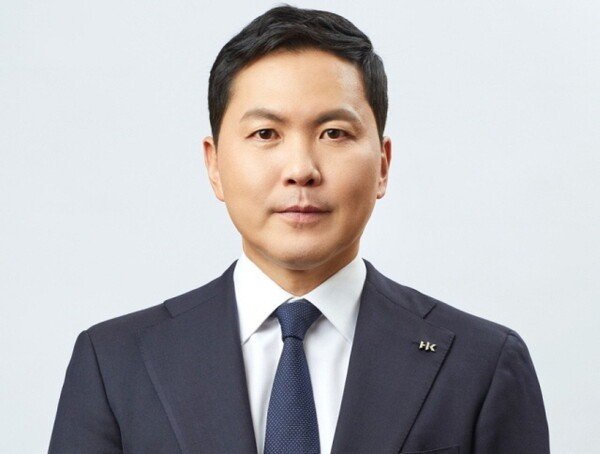
Meanwhile, Kolmar Korea’s largest shareholder is its holding company, Kolmar Holdings, which owns a 26.31% stake. Kolmar Holdings’ largest shareholder is Vice Chairman Yoon Sang-hyun, who holds a 31.90% stake.
Vice Chairman Yoon is the eldest son of Chairman Yoon Dong-han, the founder of Kolmar Korea, and a second-generation owner-executive who became the largest shareholder of Kolmar Holdings after receiving 2.3 million shares in the company as a gift from his father in December 2019.
Vice Chairman Yoon, who serves as an inside director of Kolmar Korea and CEO of Kolmar Holdings, received total remuneration of 5.332 billion won from the two companies in the first half of this year. He received 3.272 billion won from Kolmar Korea and 2.06 billion won from Kolmar Holdings.
During the same period, the average pay per employee among Kolmar Korea’s 1,515 employees was 44 million won.