
Hyundai Motor’s Chinese Supplier Faces Allegations of Camshaft Inspection Manipulation…Turns Out to Be Owned by South Korea’s SECO Group
English translation of the original Korean report. Images and source documents may contain Korean text.
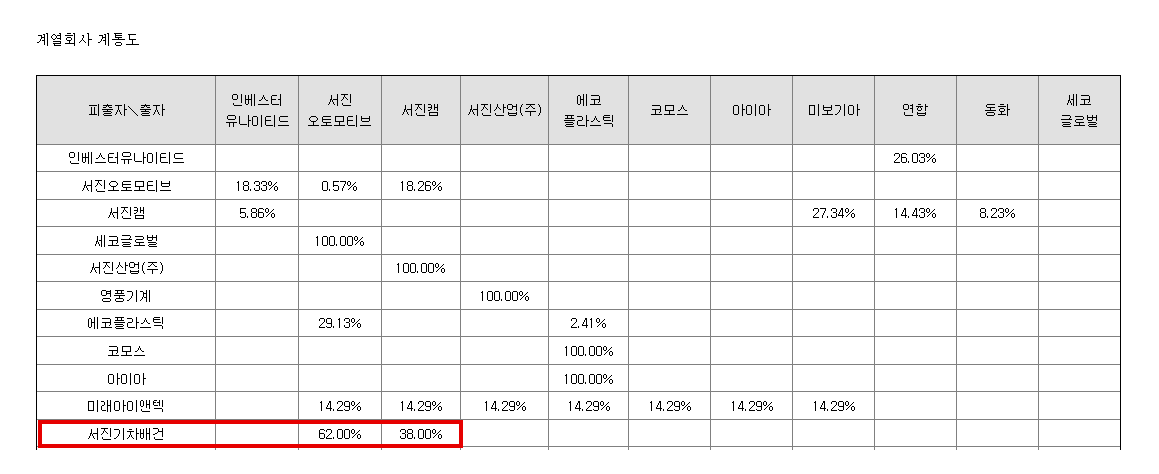
Seojin Automotive holds 62% and Seojincam 38%…Seojincam sold 63.6 billion won worth of products to the factory last year
A Chinese supplier accused of manipulating quality inspection results while supplying engine components to the Chinese subsidiaries of Hyundai Motor and Kia has been identified as an affiliate of South Korea’s SECO Group.
According to the Financial Supervisory Service’s DART electronic disclosure system on the 27th, Kosdaq-listed Seojin Automotive and unlisted Seojincam hold 62% and 38%, respectively, of the Chinese subsidiary. The two South Korean companies together hold its entire equity stake.
KBS previously reported on the 25th that approximately half of the entries on camshaft hardness inspection sheets prepared last year at a Seojin Automotive (Zhangjiagang) factory in China’s Jiangsu Province fell below the specified range of 55–61, but a supervisor instructed that the figures be changed to ’55 or higher.’ The company supplies the Chinese subsidiaries of Hyundai Motor and Kia.

A camshaft is a shaft that rotates inside an engine to open and close the intake and exhaust valves. Allegations were also raised that the hardness of the components was checked by striking them against a wooden stick.
Approximately 40,000 LPG-powered Sonata taxis manufactured at Hyundai Motor’s Beijing plant are operating in South Korea.
According to the report, Seojin Automotive (Zhangjiagang) provided an instruction sheet specifying an inspection method that involved striking the components when it outsourced factory operations to an external contractor.
Seojin Automotive (Zhangjiagang) said, ‘We do not know who instructed the use of this method,’ explaining that it had prohibited the striking procedure since late last year and had since terminated the outsourcing contract and taken over factory operations directly. The broadcast footage conveying the company’s response displayed the ‘SECO’ logo used by SECO Group.
Hyundai Motor said it had conducted 10 process audits over the past three years to assess the factory’s quality and production environment. The automaker said it had conducted sample-based visual, hardness and functional inspections of the supplied components, had found no evidence that products failing to meet the required standards had been delivered, and had received no reports of related malfunctions.
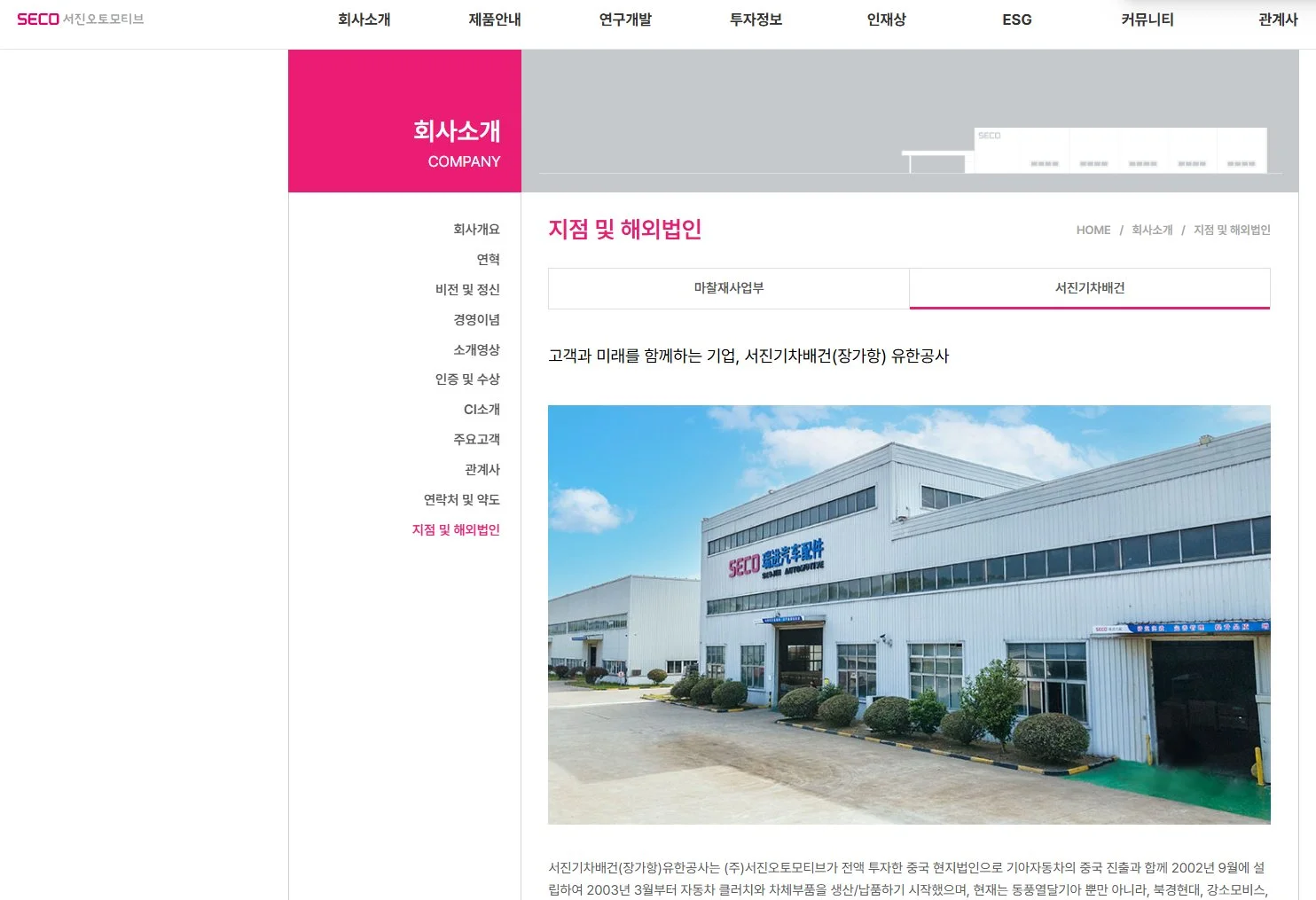
The Chinese subsidiary’s official name is Seojin Automotive (Zhangjiagang) Co., Ltd. A sign visible in a photograph of the factory on Seojin Automotive’s website bears the Chinese-language name ‘瑞进汽车配件 (Seojin Auto Parts).’
According to the website, the company was established in Zhangjiagang, Jiangsu Province, in 2002 alongside Kia’s entry into the Chinese market and opened a branch in Yancheng in 2007. Its major customers include Dongfeng Yueda Kia, Beijing Hyundai and Jiangsu Mobis.
Camshafts are the Chinese subsidiary’s main product. According to Seojin Automotive’s annual report, Seojin Automotive (Zhangjiagang) recorded camshaft sales of 97.975 billion won last year, accounting for 71.8% of its total revenue. Its total revenue and net profit last year stood at 136.6 billion won and 1.873 billion won, respectively.
Transactions with South Korean affiliates are also substantial. Seojincam sold 63.6 billion won worth of products to the Chinese subsidiary last year, up 31.4% from 48.4 billion won the previous year. The figure accounted for 15.2% of Seojincam’s total revenue of 418.3 billion won.
As of the end of last year, Seojincam’s receivables from the Chinese subsidiary amounted to 15.1 billion won. Seojincam’s major domestic customers are Hyundai Motor (28.6%) and Kia (21.9%).
Seojincam estimates its share of South Korea’s camshaft market at 70.85%, based on the number of finished vehicles produced.
■ Largest Shareholder of Company Holding 62% of Factory Stake Is an Unregistered Executive; Largest Shareholder of Company Holding 38% Is an Executive-Owned Company
Tracing the ownership structures of the two companies reveals an individual major shareholder and a company personally owned by an executive. Seojin Automotive’s largest shareholder is Mr. A, who holds a 21.68% stake. Related parties Seojincam and Investor United hold 17.82% and 17.35%, respectively. The combined stake held by Mr. A and his related parties is 56.84%.
Mr. A is also the largest shareholder of Investor United, holding a 37.87% stake.
Seojin Automotive’s third-quarter report contains conflicting descriptions of Mr. A’s executive status. The executive roster lists him as an unregistered full-time director, while the section introducing the largest shareholder states that he ‘has remained in office since taking up the position of inside director in 2011.’
The largest shareholder of Seojincam, which holds the remaining 38% stake in the Chinese subsidiary, is Mibogia, with a 27.34% stake. Mibogia is a company wholly owned by Mr. B, an inside director and executive vice president of Seojincam. Seojincam purchased 19.7 billion won worth of goods from Mibogia last year.
Seojin Automotive includes the factory in its consolidated financial statements as a ‘major subsidiary.’ Publicly available materials do not disclose who was entrusted with operating the factory last year, when the inspection sheets were prepared, how long the arrangement lasted, or whether the boards of directors of the two companies were informed of the matter.