
Hana Securities Listed Homeplus Under ‘Safety Net to Protect Principal and Interest’…Homeplus Sought Rehabilitation Just Seven Days After Issuance
English translation of the original Korean report. Images and source documents may contain Korean text.
Company With Debt Due Within a Year Four Times Its Current Assets Listed Under Credit Enhancement…Controversy Over 219.9 Billion Won in Short-Term Note Sales
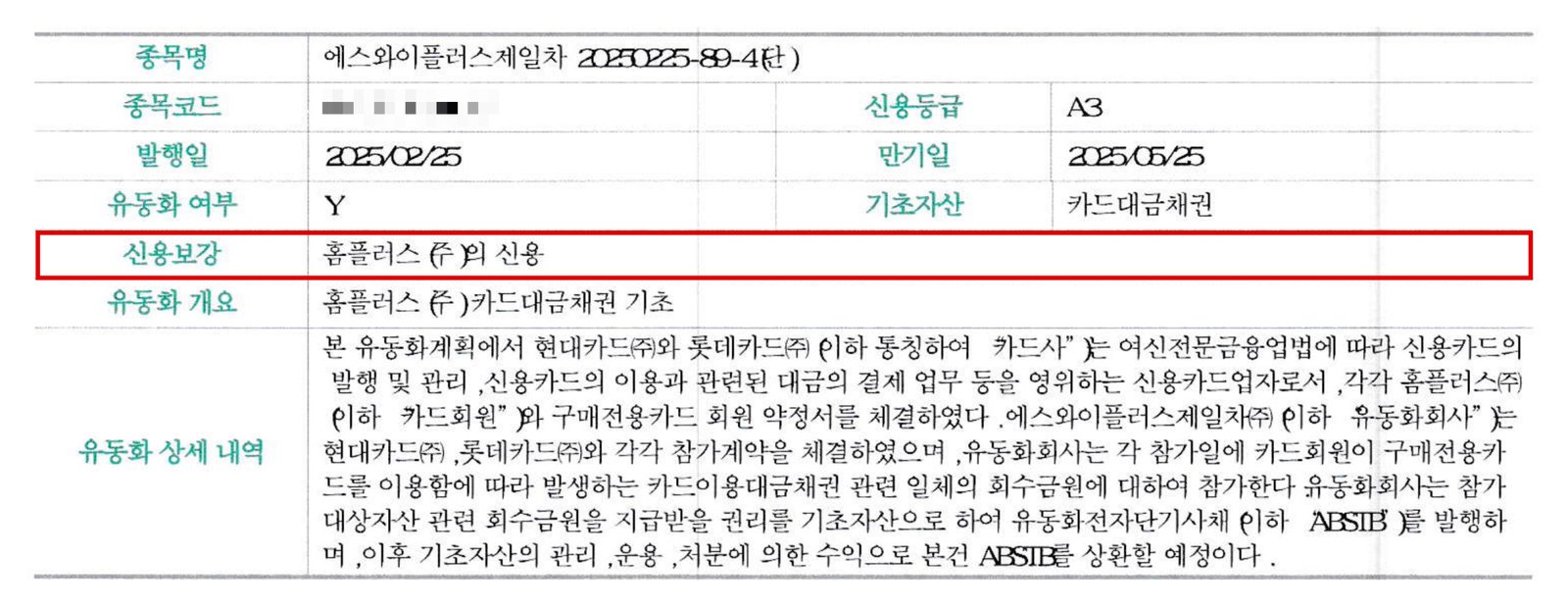
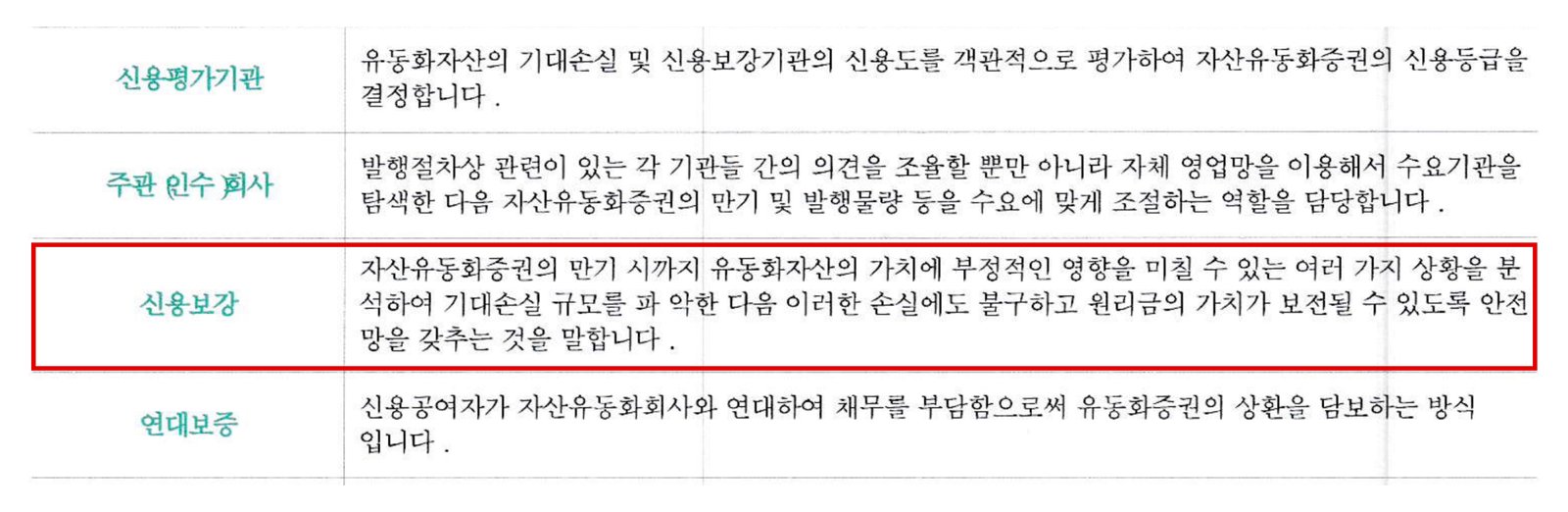
Hana Securities (President and CEO Seong-muk Kang) listed Homeplus in the credit-enhancement field of its product description for Homeplus card-payment short-term notes, defining credit enhancement as a ‘safety net’ to protect principal and interest. That same Homeplus applied for rehabilitation proceedings just seven days after the product was issued.
About six months before the securities were sold, Homeplus already had liabilities due within one year exceeding four times the value of its assets convertible into cash within a year. In other words, the company listed as a safeguard for investors’ principal was itself struggling to manage its own debt.
According to Hana Securities’ product description and the Financial Supervisory Service’s Electronic Disclosure System on the 17th, Hana Securities included a separate ‘credit enhancement’ field in the issue information for the ‘SY Plus First’ asset-backed electronic short-term notes (ABSTB), listing ‘Homeplus Co., Ltd.’s credit’ apart from the underlying asset, ‘card payment receivables.’ The product was issued on February 25, 2025, with principal repayable three months later and an A3 credit rating.
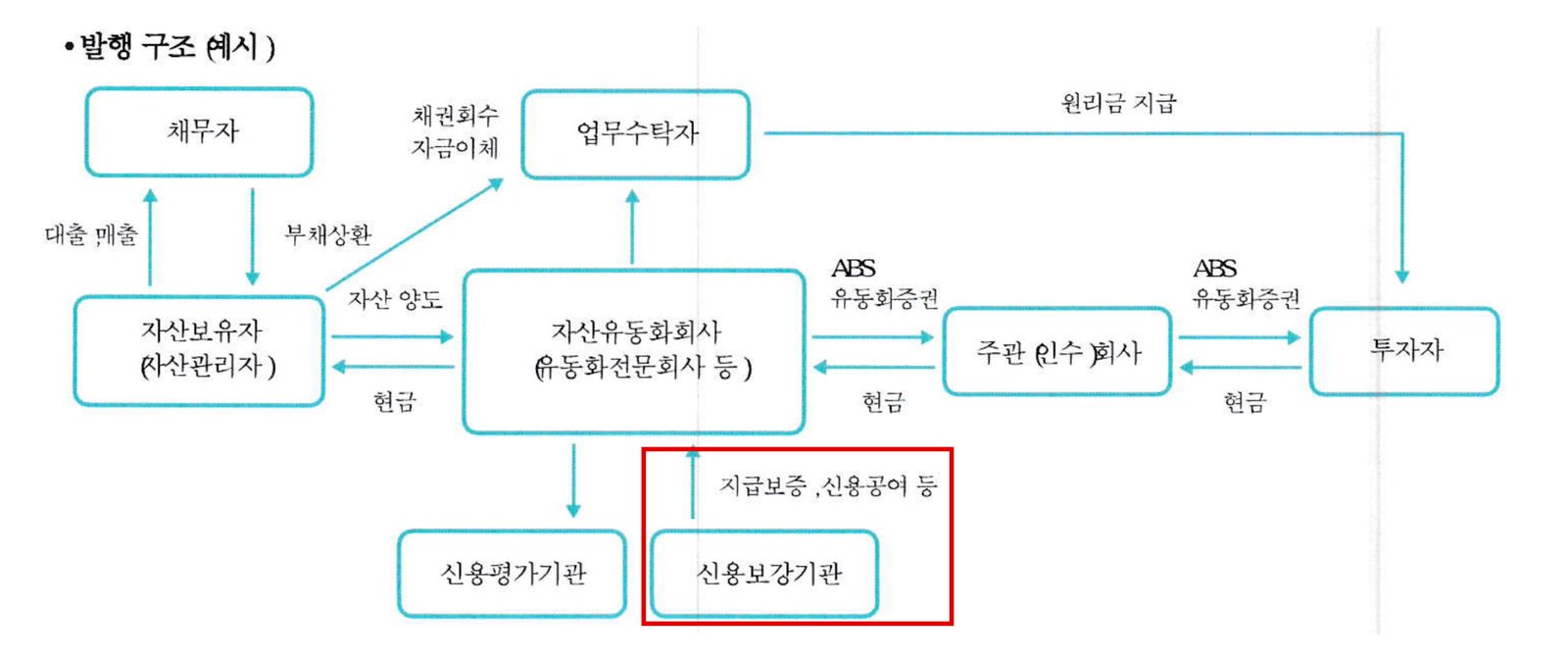
The same document defined credit enhancement as ‘putting a safety net in place’ so that the value of principal and interest could be preserved despite losses. Its issuance-structure diagram depicted a credit-enhancement institution providing payment guarantees and credit facilities to the securitization company. Under the document’s definition, Homeplus should have entered into an agreement to repay the debt on behalf of another party, but Homeplus said it had never provided payment guarantees or funding support for these notes.
When credit enhancement is actually provided, a bond’s rating rises in line with the creditworthiness of the institution providing the enhancement. Korea Investors Service’s rating methodology also defines a credit-enhancement institution as a ‘third-party institution.’ However, these notes’ A3 rating was identical to Homeplus’ own A3 short-term credit rating. A3 is the lowest tier of investment-grade ratings.
■ Homeplus, Listed as a ‘Safety Net,’ Had Short-Term Debt Four Times Its Assets Six Months Before Sales
According to Homeplus’ audit report released on May 31, 2024, the company recorded a net loss of 574.2 billion won for the period from March 2023 to February 2024, marking its second consecutive year of substantial losses. Total equity fell 70% in one year, from 871.2 billion won to 265.3 billion won.
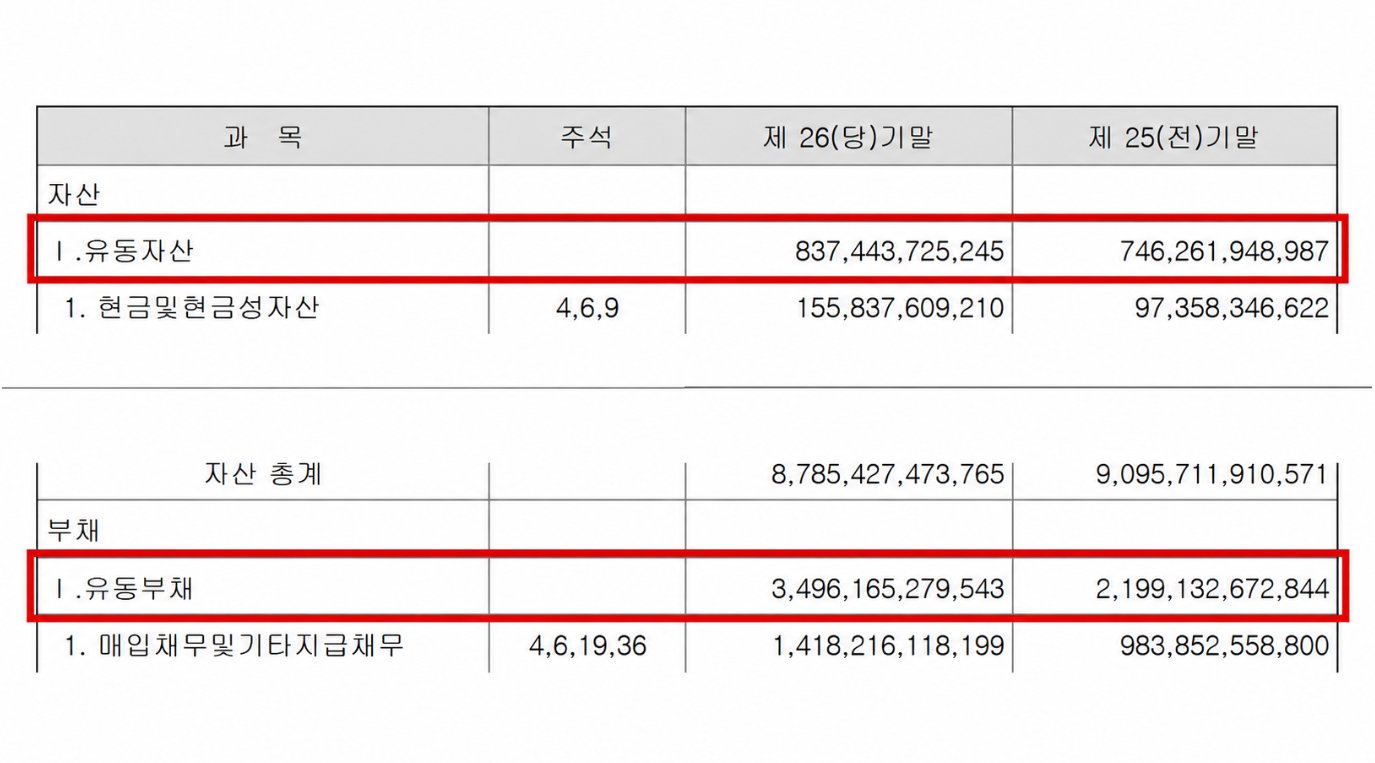
Current liabilities due within one year amounted to 3.4962 trillion won, while current assets that could be converted into cash within one year totaled just 837.4 billion won. The company held 155.8 billion won in cash and had 1.4632 trillion won in borrowings, and it had failed to comply with bank loan covenants at the end of the preceding year. Debt arising from purchase-only cards, which underpinned the short-term notes, also surged 75% in one year, from 201 billion won to 351.3 billion won.
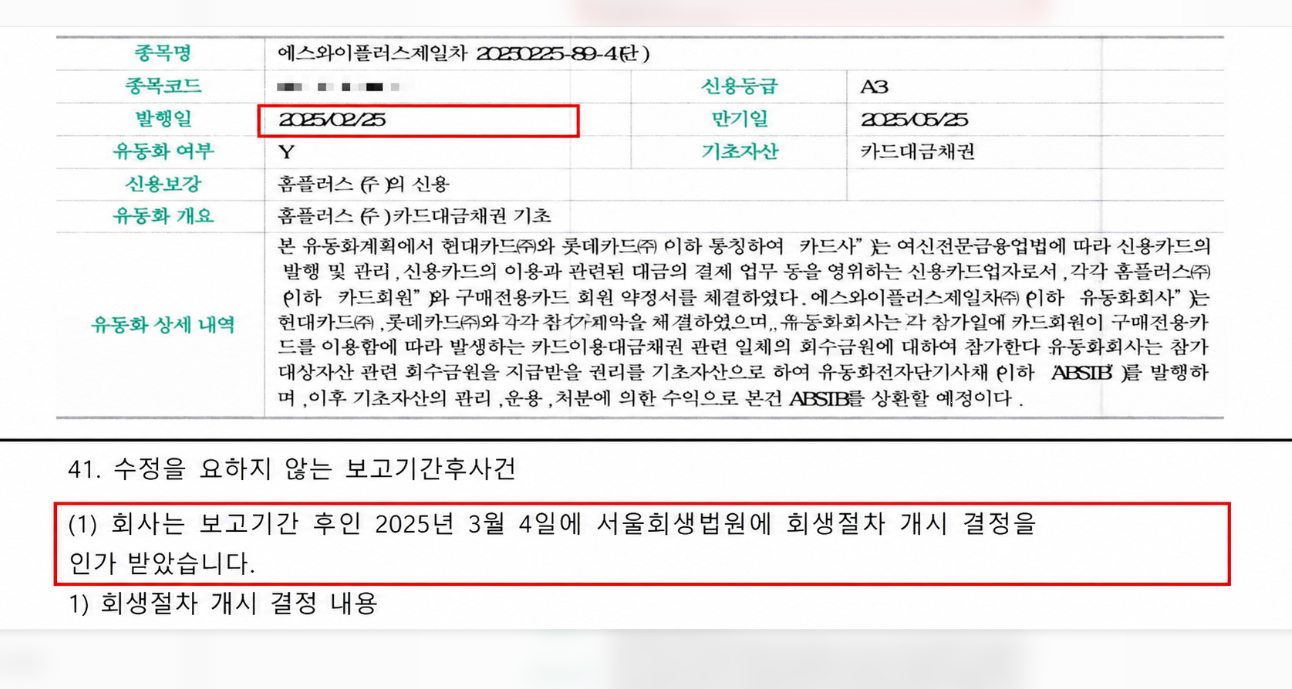
In the same report, Homeplus stated that it accounted for payments made using purchase-only cards as liabilities owed to financial institutions. When a company enters rehabilitation proceedings, repayment of debts owed to financial institutions is suspended. Korea Ratings reportedly notified Homeplus of preliminary findings indicating a credit-rating downgrade on February 25, the issuance date, and Homeplus applied for rehabilitation on March 4.
A total of 401.9 billion won in these short-term notes, issued between December 2024 and February 25, 2025, remained unpaid. An emergency response committee representing affected investors said Hana Securities had sold 219.9 billion won of the notes to 346 individual investors and 63 corporate entities.
Responding to questions from this publication, Hana Securities said, ‘Securitized securities are structured so that repayment of the underlying assets is based on the debtor’s creditworthiness,’ explaining that the phrase ‘Homeplus’ credit’ reflected this structure and was used in accordance with the Korea Securities Depository’s disclosure standards. The firm also said that the product description disclosed the possibility of principal loss and investment risks, and that Homeplus executives were under investigation on suspicion of issuing the securities without disclosing information including a credit-rating downgrade.
However, Hana Securities placed that wording in the credit-enhancement field rather than the underlying-assets field. In its third-quarter report released on the 13th, Hana Securities described the product as ‘Homeplus own-credit short-term notes,’ and two lawsuits seeking damages for mis-selling and deception, filed by customers who purchased the notes, are pending at the first-instance court.
The Financial Supervisory Service reportedly summoned Hana Securities investors on the 11th to determine whether they had received the product description and been informed of credit risks. Hana Securities had also received an institutional warning from the FSS in August 2022 over the mis-selling of private funds.
Hana Securities is a wholly owned subsidiary of Hana Financial Group (Chairman Ham Young-joo). Hana Securities said it was difficult to comment on whether it would compensate investors or on specific compensation measures because the FSS’s sanctions review process was underway. The emergency response committee is demanding that the securities firms that sold the notes provide upfront compensation equivalent to 100% of investors’ principal.