
Hyundai Motor: Cumulative 1.92 Million Units Recalled in the U.S. This Year, Including Palisade, Tucson, and Genesis G90
English translation of the original Korean report. Images and source documents may contain Korean text.
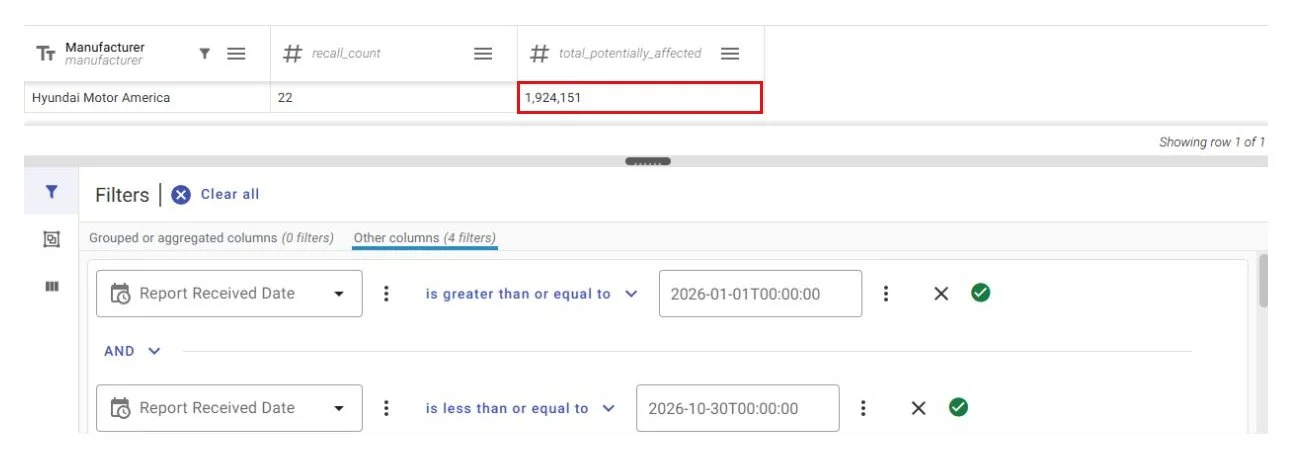
Compilation of Submissions from January 1 to October 30… 22 Cases Including Genesis, Vehicle Overlaps Between Different Recalls Included
The cumulative number of Hyundai Motor vehicles subject to recall in the U.S. this year, including Genesis, has exceeded 1.92 million units. Three major recalls concerning side curtain airbags, forward collision-avoidance assist systems, and seat belt anchorage components accounted for approximately 67% of the total affected units.
As of the 30th, a compilation of vehicle recalls by Hyundai Motor America with submission dates from January 1 to October 30 of this year, based on the raw public data of the U.S. National Highway Traffic Safety Administration (NHTSA), showed 22 cases, including Genesis. The total number of affected units per recall is 1,924,151. These recalls target vehicles sold in the U.S., including not only new cars sold this year but also vehicles produced and sold in the past.
The largest recall by affected volume in the U.S. concerns the Palisade’s side curtain airbag issue. This recall, submitted in January, included 568,576 units. The reason is that the airbag may not deploy properly during a collision, increasing the risk of injury to occupants.
For unexpected braking issues with the forward collision-avoidance assist system, 423,062 units were subject to recall. This issue involves the front camera software in vehicles like the Tucson and Santa Cruz reacting overly sensitively to collision risks, potentially causing unexpected braking for the driver.
A recall for front seat belt anchorage components that could detach affected 294,448 units. This included the Santa Fe, IONIQ 6, and Genesis G90, among others. A risk was raised that the seat belt might not adequately protect occupants during a collision.
Adding the affected units for these three cases totals 1,286,086 units, which is 66.8% of the overall sum of affected units per recall. This means that devices designed to prevent collisions or protect occupants during a collision have been subject to large-scale corrective actions.
The compilation was based on public data confirmed on the 30th, and identical recalls repeated by model and model year were counted only once per recall number. However, duplicates where the same vehicle was included in different recalls were not removed. The 1,924,151 units represent the cumulative total of the recall scope, not the actual number of vehicles with defects or vehicles that have completed repairs.
■ Instrument Cluster Display Issues: 3 Cases, 220,000 Units… Also, Fastener Defect Recalls in October
Three recalls were also submitted due to software issues that could cause the instrument cluster screen to not operate. These include 83,877 Genesis units and 41,651 various Hyundai models in January, and 96,310 Tucson-series units in June. The total number of affected units is 221,838.
If the instrument cluster turns off, the driver may not be able to see safety information such as the speedometer or warning lights. Hyundai Motor’s June Tucson recall report submitted to U.S. authorities explained that a communication error between the instrument cluster and the Head-Up Display (HUD) could cause both devices to restart together, temporarily turning off the screen.
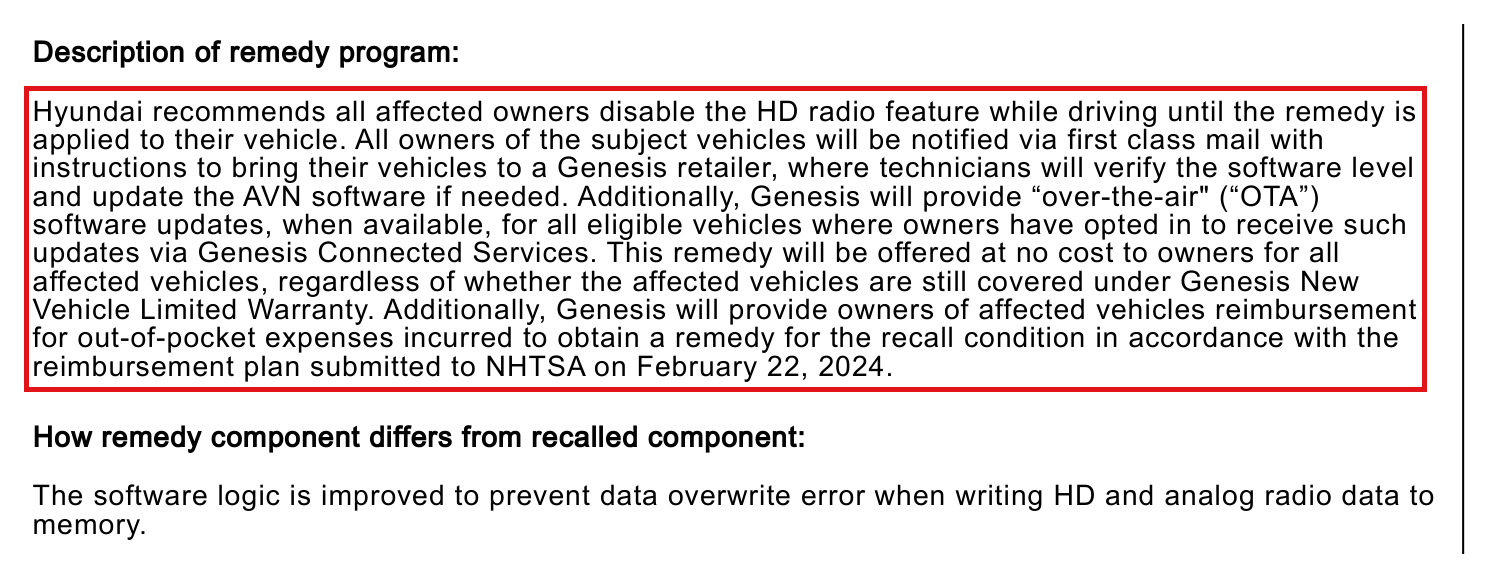
According to the report, Hyundai Motor’s North American Safety Organization began an investigation between July and September last year following customer complaints. Initial supplier tests did not reproduce the symptoms, and after joint investigations and vehicle testing, a recall was decided in June of this year. The January Genesis recall proposed an Audio, Video, and Navigation software update as a corrective action, which is distinct from the communication error between devices in the June Tucson recall.
Recently, the possibility of improper fastening during the assembly process also led to recalls. For 24 units of Tucson Hybrid and Elantra (known as Avante in Korea) submitted to U.S. authorities on October 20, the reason is the possibility that the front suspension fasteners were not sufficiently tightened. For 17 units of Venue and Elantra series, the reason is the possibility of wheel detachment due to loose wheel nuts.
Hyundai Motor’s largest shareholder is Hyundai Mobis, which held 22.36% of common shares as of the end of June. Chung Eui-sun, Chairman of Hyundai Motor Group, who holds a 2.73% stake in Hyundai Motor, serves as the Chairman of the Board, and José Muñoz, President and CEO of Hyundai Motor, oversees management.
For vehicles subject to recall in the U.S., Hyundai Motor has proposed corrective actions including free instrument cluster software updates, inspection of fastening parts, and component replacement.