
Exclusive: IPO-Bound Woojin Industrial Systems Bought ₩32 Billion From Supplier Woojin Kijeon Last Year; Accounting Interest Expense Equals 57.5% of Operating Profit
Woojin Industrial Systems, the South Korean railcar maker, booked accounting interest expense equal to 57.5% of its operating profit last year as it prepares for a stock market listing in the first half of 2027.
The 150 billion won in convertible bonds it raised ahead of the listing carries an effective interest rate of 13.0 to 14.7% on its books. In the same year, the company bought 32 billion won worth of parts from Woojin Kijeon, a supplier in which its CEO was the largest shareholder. Woojin Industrial Systems said it acquired all of Woojin Kijeon’s shares this year and made it a subsidiary.
According to the 2025 audit reports of Woojin Industrial Systems, its holding company Woojin Inc. and Woojin Kijeon, Woojin Industrial Systems posted an operating profit of 48.1 billion won last year, while interest expense on its income statement was 27.6 billion won. Interest expense rose 30% from 21.2 billion won a year earlier, but operating profit grew faster, lowering interest expense as a share of operating profit from 67.2% to 57.5%.
Not all of the interest expense was paid in cash during the year. The company said about half of it consists of non-cash amortization related to the convertible bonds.
Losses from selling receivables to financial firms to raise cash early tripled to 8.5 billion won. The company said this funded working capital for growing electric bus sales (150 units in 2023, 302 in 2024 and 408 in 2025). Total liabilities stood at 620.9 billion won at the end of last year, and the debt-to-equity ratio fell to 393.9% from 435.1% a year earlier. The company said its funding needs grow because railcar production costs come before contract payments.
Woojin Industrial Systems picked NH Investment & Securities and Kiwoom Securities as lead managers for its listing last year. Investment banking sources say it is targeting a listing in the first half of 2027. It has not decided between the KOSPI and KOSDAQ markets and has delayed the schedule once, citing market volatility.
A large part of the interest expense comes from convertible bonds, which investors can swap for shares at a fixed price. The company raised 55 billion won through ordinary convertible bonds in November 2023 from investors including Kiwoom Private Equity and another 55 billion won in August 2024. Last October it added 40 billion won in 30-year perpetual convertible bonds from Dominus Investment.
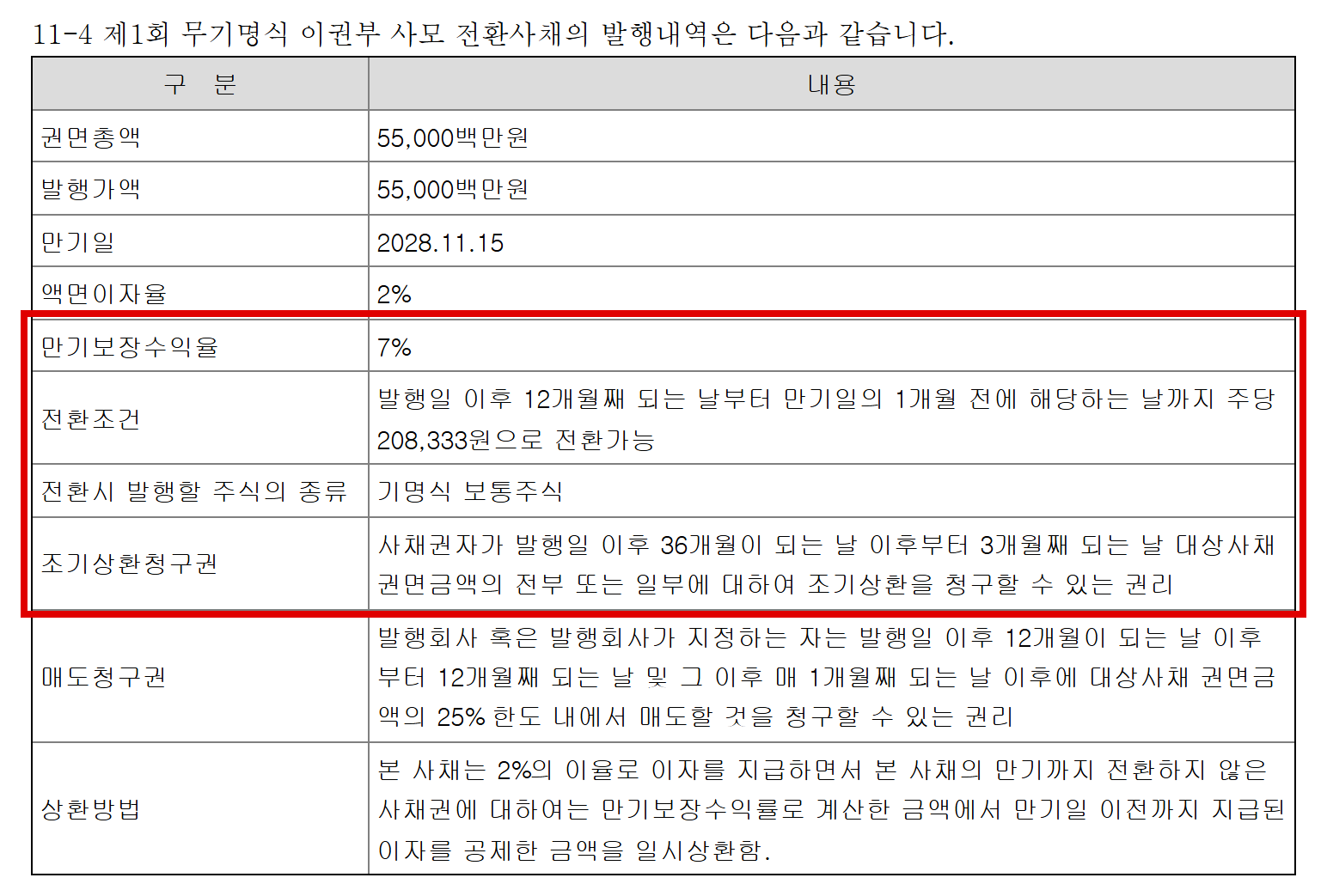
The bonds pay a 2% coupon, but the effective interest rate the company books is 13.0 to 14.7%. That accounting rate reflects the value of the conversion option and the redemption premium, and is not the rate the company pays in cash each year. For the 110 billion won in ordinary convertible bonds, the company must repay investors who do not convert with a guaranteed 7% annual yield at maturity in November 2028, which adds 30.5 billion won.
The guaranteed yield on the perpetual bonds steps up over time to as much as 20%. However, the company holds the right to redeem them early on interest payment dates starting 18 months after issuance and said it plans to exercise it at an appropriate time. It also said convertible bond investors seek equity participation rather than interest income, so the 2% coupon reflects the real cost, and that a 7% yield to maturity is not excessive given market rates.
A listing would let bondholders sell converted shares on the market. Assuming all the bonds convert, based on the year-end share count and the disclosed conversion prices, investors would own 35% of the company and Woojin Inc.’s stake would fall from 100% to 65%.
The company has said earlier that the rise in borrowing went toward buying raw materials in advance for railcar and electric bus orders it had already won.
■ 32 billion won bought from Woojin Kijeon last year; fully acquired this year
Woojin Kijeon is a railcar parts maker in Goesan, North Chungcheong Province. Its 2025 audit report lists the CEO of Woojin Industrial Systems as its largest shareholder with an 80% stake at the end of last year, and the same CEO signed the report as Woojin Kijeon’s CEO. Woojin Industrial Systems said it bought all of Woojin Kijeon’s shares this year, making it a wholly owned subsidiary. The company’s response did not state the purchase price.
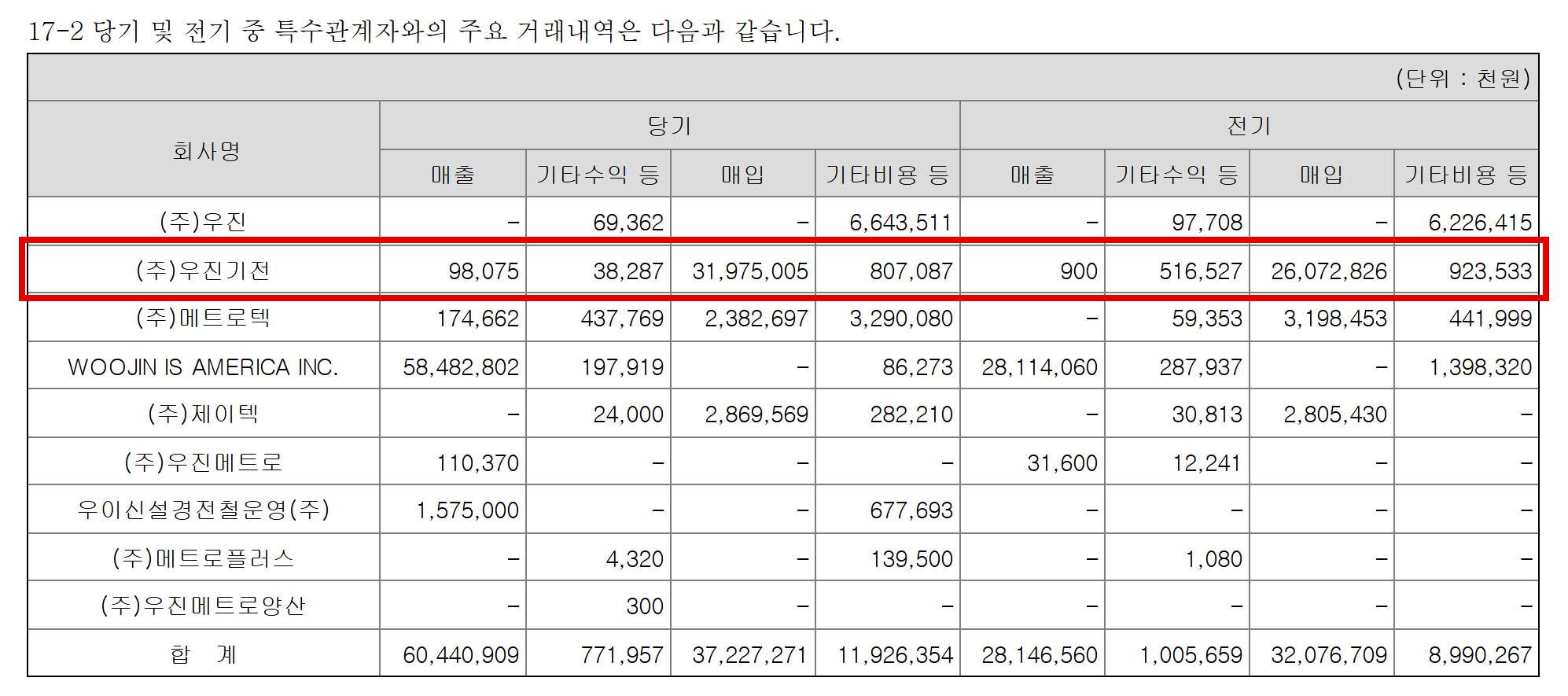
According to Woojin Industrial Systems’ books, it bought 31.97 billion won worth of goods from Woojin Kijeon last year. The company said Woojin Kijeon also supplies the Seoul, Busan and Gwangju transit corporations as well as Hyundai Rotem and Dawonsys, and accounts for less than 10% of Woojin Industrial Systems’ total parts purchases.
Woojin Kijeon’s net profit doubled in a year to 6.4 billion won from 3.2 billion won. The company said the increase did not come from its transactions with Woojin Industrial Systems.
The balance the company described as advance payments to Woojin Kijeon is recorded as other receivables on Woojin Industrial Systems’ books, rising from about 7.2 billion won at the end of 2024 to 12.1 billion won at the end of last year. The company said the increase reflected parts for three new projects won in late 2024 and early 2025.
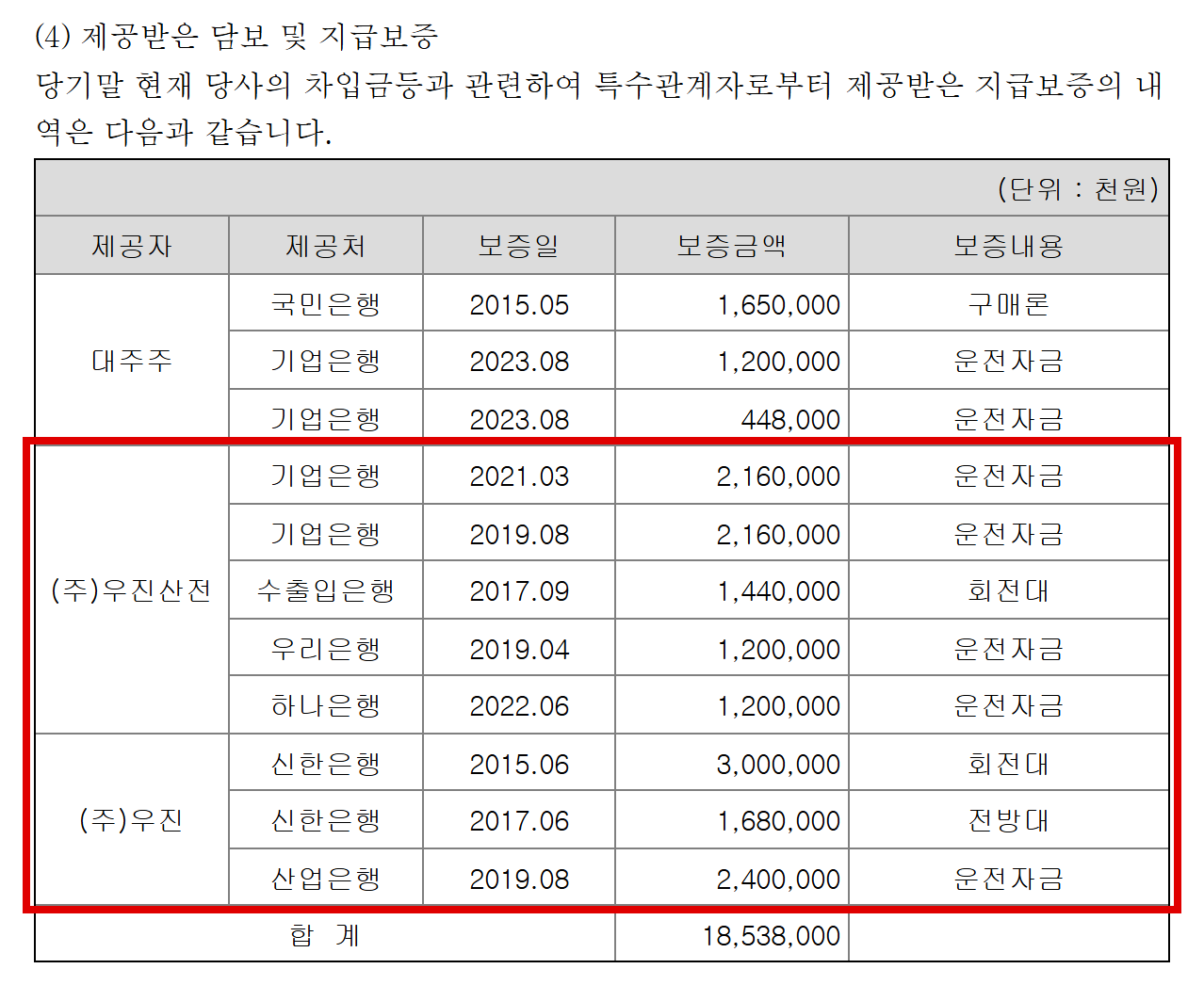
As of the end of last year, Woojin Industrial Systems guaranteed 8.2 billion won and Woojin Inc. 7.1 billion won of Woojin Kijeon’s bank loans. The company said Woojin Kijeon is now a wholly owned subsidiary and that guaranteeing a subsidiary’s loans is common in Korea.
Woojin Inc. sits at the top of the group. An individual largest shareholder owns 26% of Woojin Inc. and the chairman 10%. Woojin Industrial Systems booked 5.55 billion won in management service fees to Woojin Inc. last year, equal to 41% of its net profit of 13.4 billion won. The company said Woojin Inc. holds the group’s trademark rights and supports accounting and treasury work, and is paid under a legitimate contract.
Its main U.S. contract was also won as the sole bidder. Woojin IS America, the group’s U.S. unit, won a contract worth more than $200 million in 2024 to overhaul Los Angeles Metro’s A650 subway cars, after a European contractor had failed to complete the job. According to an LA Metro board report, Woojin was the only bidder, and the board ratified the contract after the fact last May because Metro staff had left requirements of Metro’s own manufacturing jobs policy out of the solicitation and contract.
LA Metro’s 2024 contract approval document requires all 70 base cars to be delivered within 56 months of notice to proceed, with the majority in service by the Olympics in July 2028, and allows liquidated damages for late delivery. The company said the current schedule matches the original contract and most cars will be delivered in time for the Olympics. Woojin obtained a 61.3 billion won performance bond from an insurer and submitted it to LA Metro.
Receivables from the U.S. unit are also large. Woojin Industrial Systems sold 58.5 billion won worth of goods to Woojin IS America last year and had 71 billion won in receivables at year-end, more than the unit’s total assets of 64.9 billion won. Woojin Inc. owns 52% of the U.S. unit. The company said the receivables reflect the gap between revenue recognition and payment collection on long-term projects lasting three to five years.
The Inglewood light rail project in Los Angeles, where Woojin was named preferred bidder in 2024 and expected more than $300 million in revenue, has stalled after federal funding was cut and a request for additional regional funding was rejected. Woojin Industrial Systems said the delay stems from the client, not the company.
At home, Seoul Metro’s order for 376 subway cars on Lines 6 and 7 went to a private contract after three tenders this year failed with Woojin Industrial Systems as the only bidder. The contract was worth 574.7 billion won. The company said there were no legal or procedural problems in the tender and that it has strengthened internal checks before bidding to avoid repeating past mistakes.
A media report said the Korea Fair Trade Commission recently conducted an on-site inspection of Woojin Industrial Systems over alleged bid-rigging. The company said the probe is not about bid-rigging in railcar tenders.
Woojin Industrial Systems’ position is that its transactions with Woojin Kijeon are not large, and that there are no problems with its convertible bond terms or its domestic and overseas bidding.
(Revised Oct. 29) Woojin Industrial Systems sent its views on how certain figures should be read, including the share of interest expense that involves no cash outflow and the basis for assessing its convertible bond rates. Newsfield reflected these views by adding the accounting meaning of the figures, along with the company’s explanations and changes since the disclosures, such as Woojin Kijeon becoming a subsidiary this year.