
Exclusive: IPO-Bound Woojin Industrial Systems Buys ₩32 Billion in Parts From Chairman’s Daughter’s Firm as Interest Costs Eat Up 57% of Operating Profit
Woojin Industrial Systems, the South Korean railcar maker led by Chairman and CEO Kim Young-chang, spent 57% of its operating profit on interest last year as it prepares for a stock market listing in the first half of 2027. The 150 billion won in convertible bonds it raised ahead of the listing carries an effective interest rate of 13 to 15% a year. In the same year, the company bought 32 billion won worth of parts from Woojin Kijeon, a supplier 80% owned by the chairman’s third daughter.
According to the 2025 audit reports of Woojin Industrial Systems, its holding company Woojin Inc. and Woojin Kijeon, reviewed on Oct. 28, Woojin Industrial Systems posted an operating profit of 48.1 billion won last year but paid 27.6 billion won in interest, up 30% from 21.2 billion won a year earlier. Losses from selling receivables to financial firms to raise cash early tripled to 8.5 billion won. Total liabilities stood at 620.9 billion won, 3.9 times its equity of 157.6 billion won.
Convertible bonds, which investors can swap for shares at a fixed price, are at the center of the interest burden. The company raised 55 billion won through such bonds in November 2023 from investors including Kiwoom Private Equity and another 55 billion won in August 2024. Last October it added 40 billion won in 30-year perpetual convertible bonds from Dominus Investment.
The bonds pay a 2% coupon, but the effective interest rate the company books is 13.0 to 14.7%. If investors do not convert, the company must repay them at maturity with a guaranteed 7% annual yield. The 110 billion won due in November 2028 carries an extra 30.5 billion won for that guarantee. The guaranteed yield on the perpetual bonds steps up over time to as much as 20%.
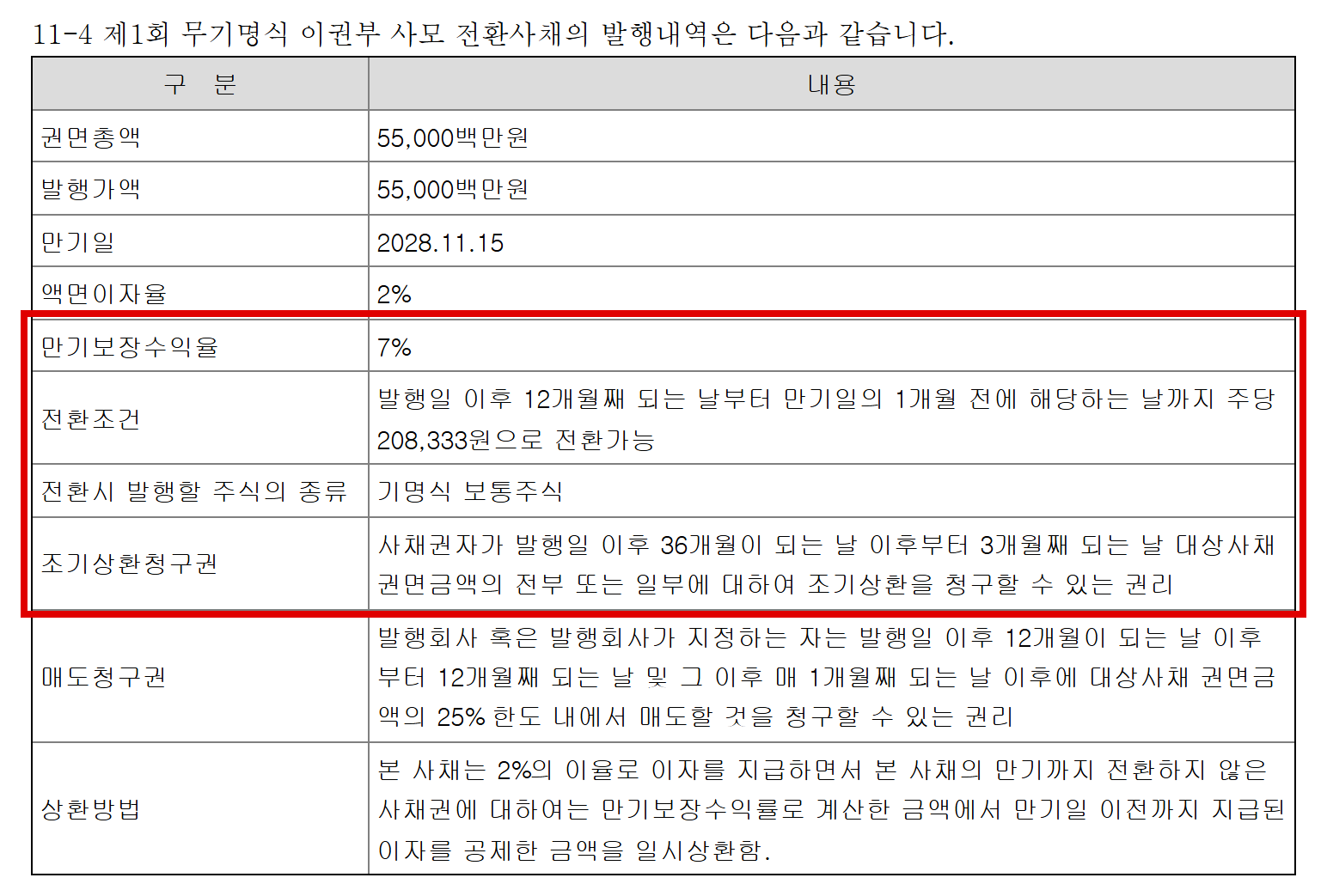
The clock is ticking. Under the terms stated in the audit report, holders of the first 55 billion won tranche can demand early repayment from Nov. 15, three years after issuance. Because unlisted shares are hard to sell, investors need a listing to profit from conversion. If all the bonds convert, investors would own 35% of the company and Woojin Inc.’s stake would fall from 100% to 65%.
The company has said earlier that the rise in borrowing went toward buying raw materials in advance for railcar and electric bus orders it had already won.
■ Chairman’s daughter’s company gets 60% of its sales from Woojin
Woojin Kijeon is a railcar parts maker in Goesan, North Chungcheong Province. Its CEO, Kim Jung-hyun, owns 80% of the company. She is the third of Chairman Kim’s four daughters and one son, and was introduced as president of Woojin Industrial Systems in 2021.
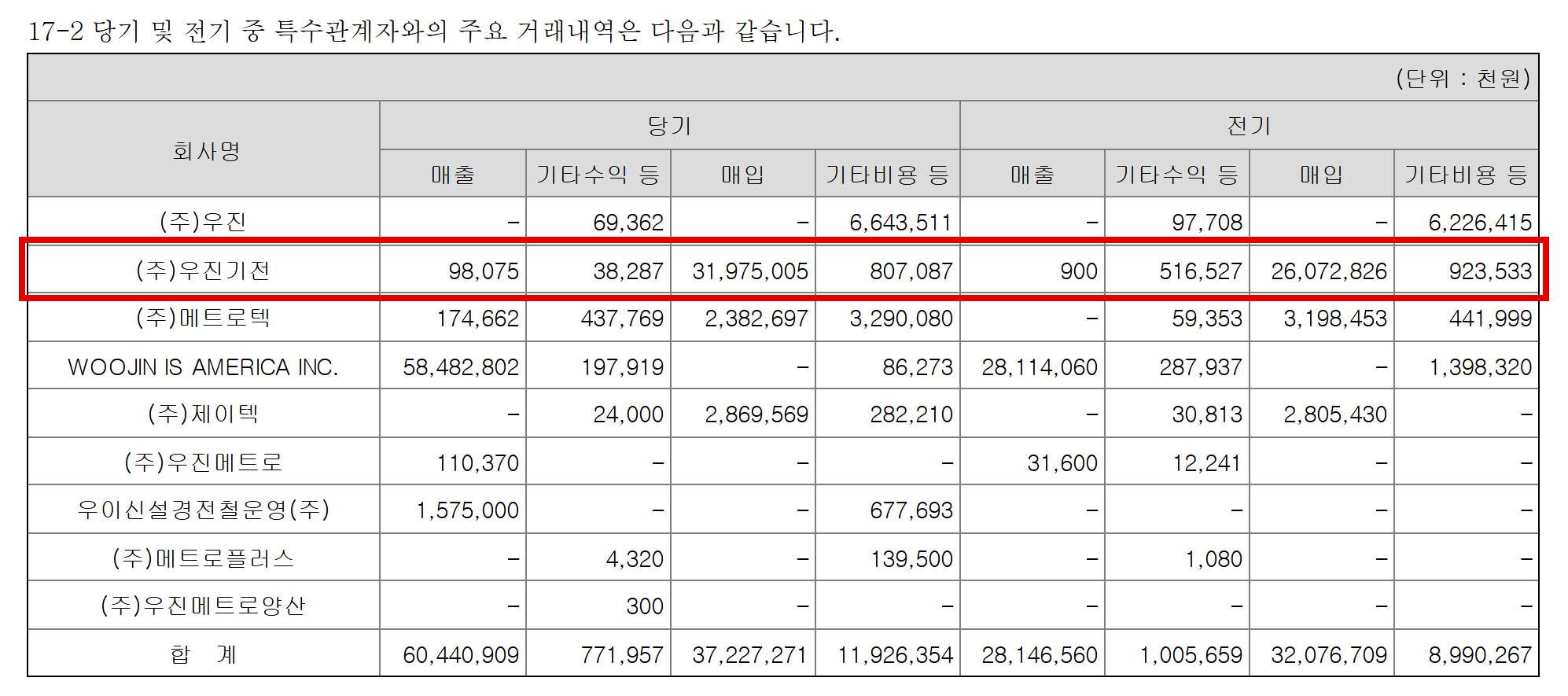
Woojin Industrial Systems bought 31.97 billion won worth of goods from Woojin Kijeon last year, equal to 60% of Woojin Kijeon’s total sales of 52.9 billion won. In 2024, 28.7 billion won of Woojin Kijeon’s 47.8 billion won in sales, or 60%, also came from Woojin Industrial Systems. Woojin Kijeon’s net profit doubled in a year to 6.4 billion won from 3.2 billion won.
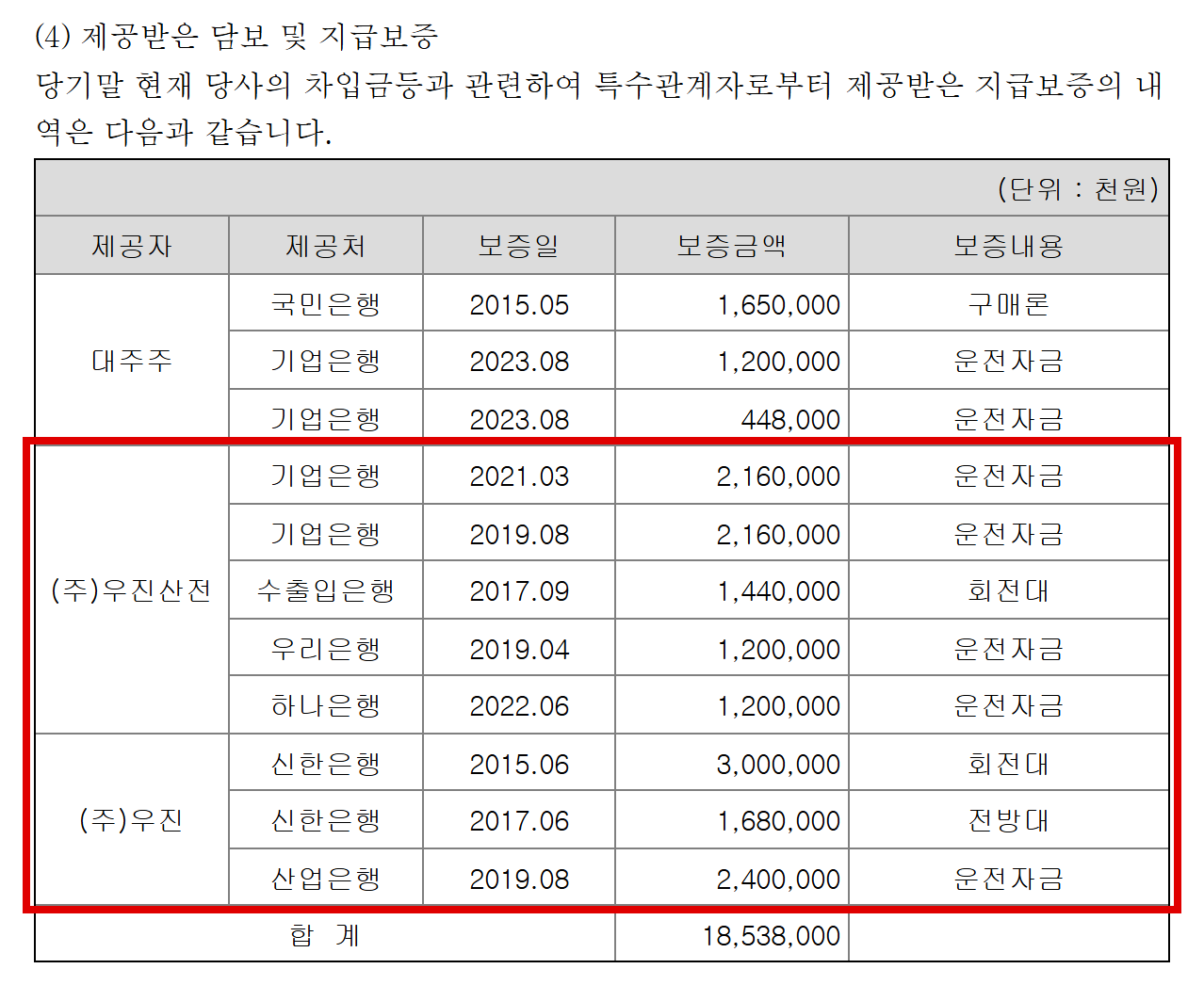
Woojin Industrial Systems also paid in advance. Advance payments for goods not yet delivered more than doubled to 12.1 billion won at the end of last year from 4.9 billion won a year earlier. Woojin Industrial Systems guaranteed 8.2 billion won and Woojin Inc. 7.1 billion won of Woojin Kijeon’s bank loans. CEO Kim Jung-hyun personally guaranteed 3.3 billion won.
Korea’s Inheritance and Gift Tax Act taxes profits that a family-owned company earns from affiliate orders as a gift to the owners. For a small or medium-sized beneficiary company, the thresholds are affiliate sales above 50% and family ownership above 10%. Woojin Kijeon exceeds both. The Woojin group has less than 5 trillion won in assets, so it falls outside the Fair Trade Act’s rules on tunneling benefits to controlling families.
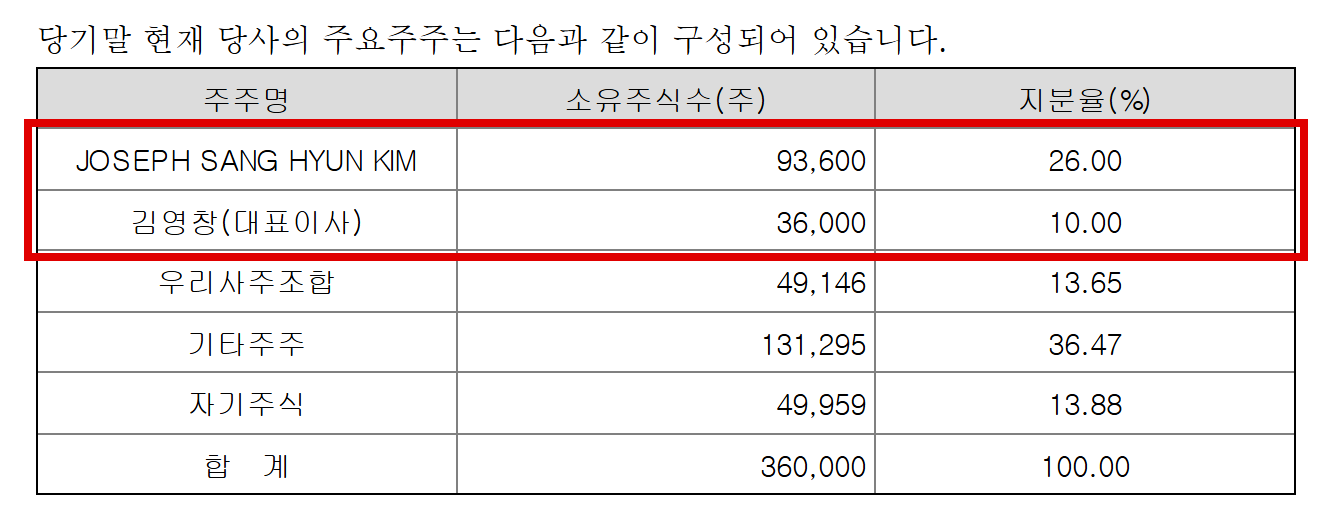
Woojin Inc. sits at the top of the group. JOSEPH SANG HYUN KIM owns 26% of Woojin Inc. and Chairman Kim 10%. Woojin Industrial Systems paid Woojin Inc. 5.6 billion won in management service fees last year, equal to 41% of its net profit of 13.4 billion won.
Its overseas business also centers on a contract won as the sole bidder. Woojin IS America, the group’s U.S. unit, won a contract worth more than $200 million in 2024 to overhaul Los Angeles Metro’s A650 subway cars. According to an LA Metro board report, Woojin was the only bidder, and the board ratified the contract after the fact last May because Metro staff had left out requirements of its manufacturing jobs policy.
The company has said the refurbished cars would be ready for the 2028 Los Angeles Olympics, but foreign media reports say the first car is scheduled for delivery to Los Angeles in October 2027 and the last in April 2029, after the Games. Woojin obtained a 61.3 billion won performance bond from an insurer and submitted it to LA Metro.
Money tied up in the U.S. unit is large. Woojin Industrial Systems sold 58.5 billion won worth of goods to Woojin IS America last year and was owed 71 billion won at year-end, more than the unit’s total assets of 64.9 billion won. Woojin Inc. owns 52% of the U.S. unit. The Inglewood light rail project in Los Angeles, where Woojin was named preferred bidder in 2024 and expected more than $300 million in revenue, has stalled after federal funding was cut and a request for additional regional funding was rejected.
At home, Seoul Metro’s order for 376 subway cars on Lines 6 and 7 went to a private contract after three tenders this year failed with Woojin Industrial Systems as the only bidder. The contract was worth 574.7 billion won, 99.999% of the base price. The Korea Fair Trade Commission recently sent investigators to Woojin Industrial Systems to obtain materials related to alleged bid-rigging. The company said it understands the probe is not about bid-rigging in railcar tenders.